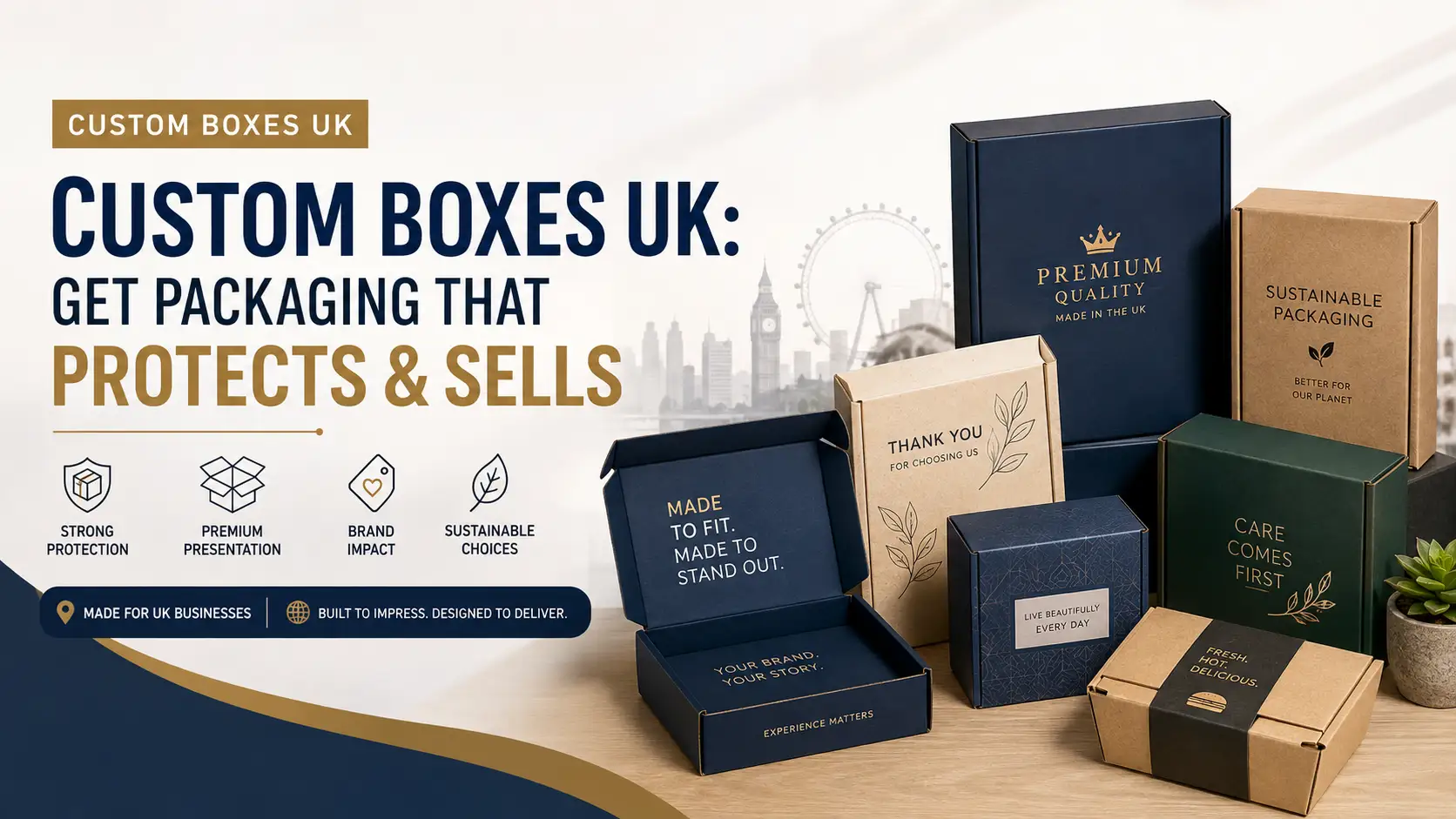
Poor packaging creates costs that are easy to miss. Products arrive damaged. Boxes take up too much storage space. Staff waste time adding extra tape and void fill. Customers receive an order that looks less valuable than the product inside.
The right custom boxes UK businesses use should solve these problems before printing begins. A good box fits the product, survives handling, supports efficient packing and presents the brand clearly.
Custom packaging is not only for luxury products or large retailers. Ecommerce sellers, takeaway businesses, cosmetics brands, healthcare suppliers and independent shops can all use made-to-measure packaging to improve protection and customer experience.
The key is choosing each part for a practical reason.
What Makes a Custom Box Effective?
An effective custom box performs five jobs:
- Protects the product during storage, handling, and delivery
- Uses space efficiently
- Makes packing easier for staff
- Presents important product and brand information clearly
- Creates a positive opening or retail experience
A beautiful box that crushes during delivery has failed. So has a strong box that is expensive to store, slow to assemble, or difficult for customers to recycle.
The best packaging balances protection, presentation, cost, and usability.
Types of Packaging Boxes and Their Best Uses
There is no single box style that works for every product. Product weight, fragility, sales channel and customer expectations all affect the decision.
| Box type | Best suited to | Main advantage | Important consideration |
| Folding cartons | Cosmetics, supplements, small electronics and retail products | Lightweight and highly printable | May need an insert for fragile products |
| Corrugated mailer boxes | Ecommerce orders, subscription products and gifts | Strong protection with a good opening experience | Board strength should match the product weight |
| Shipping boxes | Larger orders and heavier products | Built for handling and transport | Oversized boxes increase void fill and delivery costs |
| Rigid boxes | Jewellery, luxury gifts and premium cosmetics | Strong structure and premium presentation | Usually costs more and takes up more storage space |
| Sleeve packaging | Food trays, cosmetics, candles and product bundles | Adds branding without replacing the main container | Must fit tightly enough to stay in position |
| Display boxes | Supermarkets, counters and retail shelves | Combines transport packaging with product display | Openings must not weaken the structure |
| Food cartons | Burgers, bakery products, drinks and takeaway meals | Supports safe handling and convenient serving | Materials and coatings must suit the food type |
OneStep CustomBoxes produces customised packaging across retail, food, ecommerce, beauty, healthcare, CBD and luxury product categories, with choices in size, style and finish.
How to Choose Packaging for a Product
Packaging decisions should begin with the product, not the logo.
1. Measure the Product Properly
Measure the product at its widest, longest, and tallest points. Include any parts that move, fold, or extend.
Allow enough room for:
- Protective inserts
- Instruction leaflets
- Charging cables
- Accessories
- Tissue paper
- Product movement during packing
A box that is too tight can place pressure on bottles, lids, or delicate corners. A box that is too large allows movement and increases the need for extra filling material.
For product sets, arrange every item as it will appear inside the final box before confirming dimensions.
2. Identify the Main Packaging Risks
Different products fail in different ways.
A glass skincare bottle may break through impact. A Burger box may lose strength through grease and moisture. An electronic item may be damaged by movement. Jewellery can arrive safely but still look disappointing if it is loose inside the box.
Consider:
- Product weight
- Fragility
- Moisture or grease exposure
- Temperature changes
- Crushing during stacking
- Movement during transport
- Tampering
- Light exposure
- Customer handling
Protect against likely risks rather than adding material without a clear purpose.
3. Consider Where the Box Will Be Used
Retail and ecommerce packaging face different conditions.
Retail packaging needs to:
- Stand neatly on a shelf
- Display information clearly
- Look consistent beside competing products
- Handle repeated customer contact
- Work with shelf dimensions and hanging systems
Ecommerce packaging needs to:
- Survive delivery networks
- Close securely
- Use space efficiently
- Protect the product without excessive void fill
- Create a good experience when opened
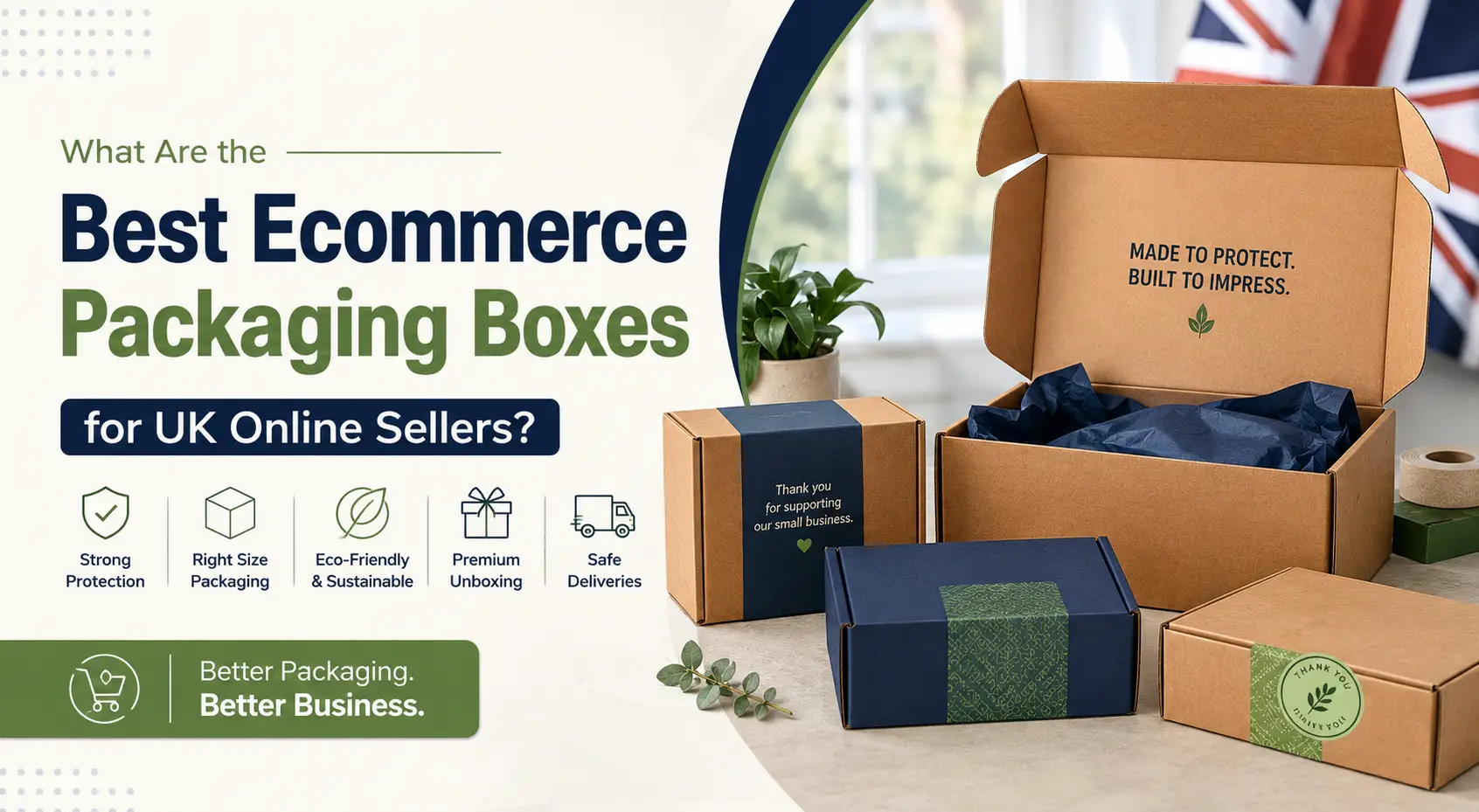
The best packaging for online businesses UK sellers choose is often a corrugated mailer or shipping box with a fitted insert. A thin retail carton may still be placed inside, but it should not be expected to handle the full delivery journey alone.
4. Plan Around Packing and Storage
A packaging design affects daily operations long after the artwork is approved.
Ask practical questions:
- Does the box arrive flat or fully assembled?
- How much warehouse space will it use?
- How quickly can staff assemble it?
- Does it need glue, tape or locking tabs?
- Can the product be inserted without damage?
- Is the barcode easy to scan?
- Can packed boxes be stacked safely?
- Will the design work with current fulfilment equipment?
Small delays matter at scale. A box that takes 20 extra seconds to assemble adds more than five hours of labour across 1,000 orders.
5. Test Before Ordering a Large Quantity
A physical sample can reveal problems that are difficult to see on a screen.
Check:
- Product fit
- Insert grip
- Opening and closing
- Board strength
- Printed colour
- Text size
- Barcode scanning
- Surface finish
- Shipping performance
- Customer opening experience
For ecommerce packaging, pack a real product and send it through a normal delivery route. The condition on arrival is more useful than a box that has only been tested on a desk.
Corrugated vs Cardboard Boxes
People often use “cardboard” as a general term, but folding carton board and corrugated board behave differently.
| Factor | Folding cardboard carton | Corrugated box |
| Structure | Usually one layer of paperboard | Fluted layer between liner boards |
| Weight | Light | Light to heavy, depending on grade |
| Protection | Suitable for lightweight retail products | Better resistance to crushing and impact |
| Printing | Excellent for detailed retail artwork | Good, with several print options available |
| Storage | Usually supplied flat | Often supplied flat but uses more space |
| Typical uses | Cosmetics, supplements, small food products and accessories | Ecommerce, electronics, shoes, bottles and shipping |
| Cost | Often lower for lightweight products | Depends on size, flute and print method |
Use folding cartons when presentation and low weight matter most. Use Corrugated boxes when the product needs more structural protection.
Many businesses use both: a printed folding carton for retail presentation and a corrugated outer box for shipping.
Packaging Choices for Different UK Industries
Each category has its own operational priorities. A material or feature that adds value in one sector may create unnecessary cost in another.
Ecommerce Packaging
Useful Ecommerce packaging ideas UK brands can apply include:
- Self-locking mailer boxes
- Tear strips for easier opening
- Double adhesive strips for returns
- Printed inside lids
- Paper-based inserts
- QR codes for setup instructions
- Compact box sizes for different product ranges
Avoid using one oversized box for every order. A small range of standard sizes often reduces space, filling material and shipping costs.
Fast Food and Takeaway Packaging
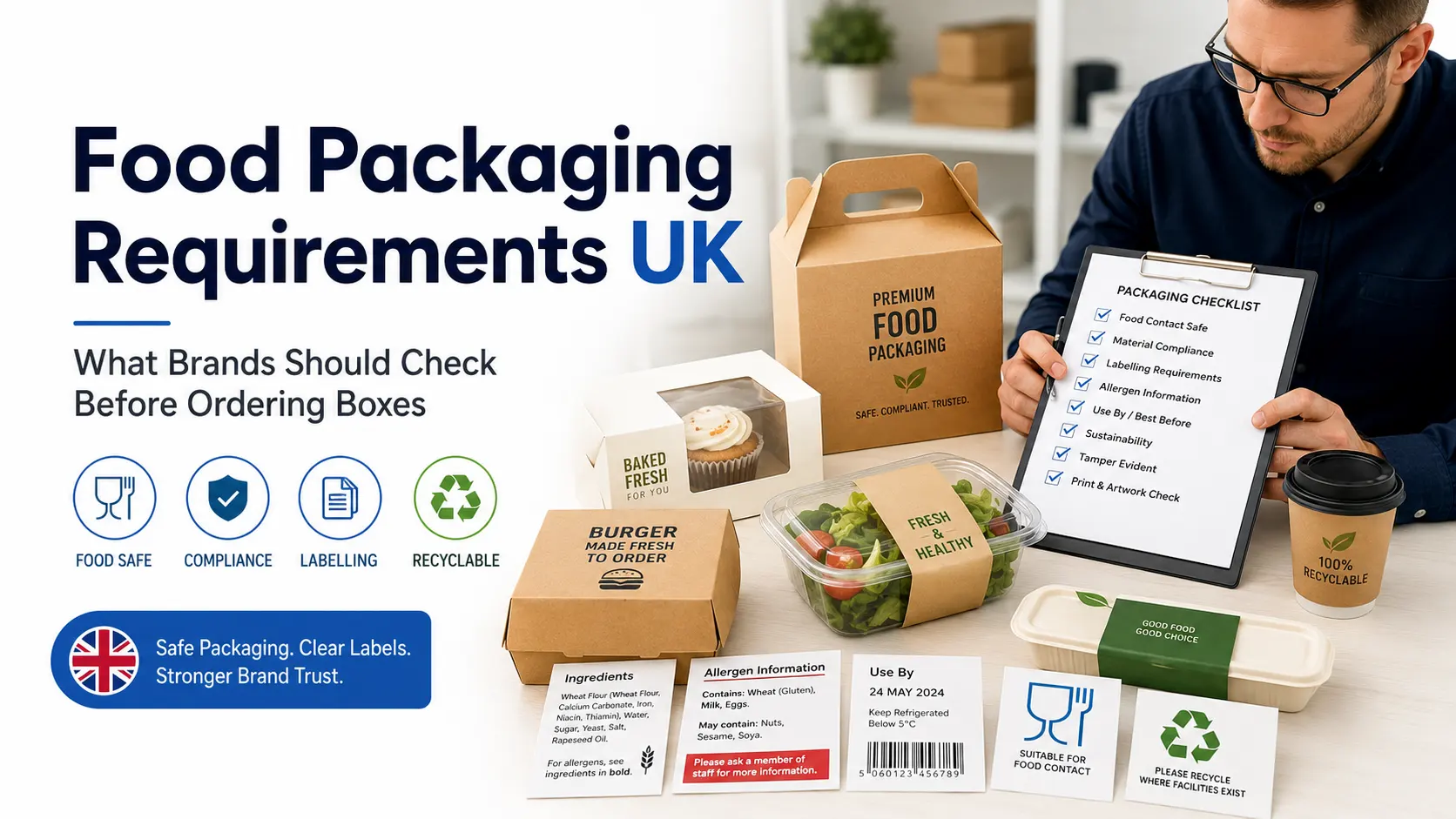
Good Fast food packaging ideas focus on temperature, ventilation, grease resistance and ease of use.
Burger, chip and meal boxes may need:
- Food-suitable materials
- Grease-resistant barriers
- Ventilation holes
- Secure locking tabs
- Easy stacking
- Clear product identification
- Enough space to avoid crushing the food
The strongest material is not always the best choice. Too little ventilation can trap steam and affect texture, even when the box remains firm.
Beauty and Cosmetics Packaging
Effective Cosmetic packaging ideas UK brands use combine shelf appeal with protection.
Folding cartons work well for creams, makeup, and skincare tubes. Glass bottles, droppers, and perfume products often benefit from fitted inserts that prevent movement.
Useful features include:
- Product shade identification
- Batch and barcode space
- Tamper-evident closures
- Protective bottle inserts
- Matte or soft-touch finishes
- Foil or embossed logo details
- Inside printing for instructions or brand messages
Beauty packaging often becomes part of the buying decision, particularly when products are sold as gifts or promoted through social media. OneStep CustomBoxes offers cosmetic packaging options for skincare, makeup, perfume, beauty kits and retail collections, including inserts and premium finishes.
Healthcare, Medical and Supplement Packaging
Healthcare packaging design ideas should put legibility, organisation and product security ahead of decorative details.
Space may be needed for:
- Directions
- Warnings
- Ingredients
- Storage instructions
- Batch information
- Expiry dates
- Barcodes
- Regulatory wording
- Braille, where applicable
Medical and healthcare products may have specific legal, safety or labelling requirements. Packaging artwork should be reviewed by a qualified compliance professional before production.
For supplement packaging design ideas, make it easy for customers to identify the product type, quantity and usage information. Avoid finishes or busy graphics that reduce the readability of essential text.
Electronics Packaging
Strong Electronics packaging design ideas begin with movement control.
Electronics often need:
- Corrugated outer protection
- Fitted board or foam inserts
- Separate spaces for cables and accessories
- Protection for screens and corners
- Tamper-evident seals
- Clear model and serial information
- Anti-static protection where required
A fitted insert can reduce damage more effectively than adding loose filling material. It also creates a cleaner presentation when the customer opens the box.
Jewellery and Gift Packaging
The best Jewellery packaging ideas UK retailers use keep small items secure and centred.
Common choices include:
- Rigid boxes
- Drawer boxes
- Hinged boxes
- Velvet or paper-covered inserts
- Die-cut card holders
- Foil-stamped logos
- Protective sleeves
- Branded message cards
For luxury gift box packaging ideas, consider how several items will sit together. Heavy or fragile bundles need dividers and a stronger board, not only decorative tissue.
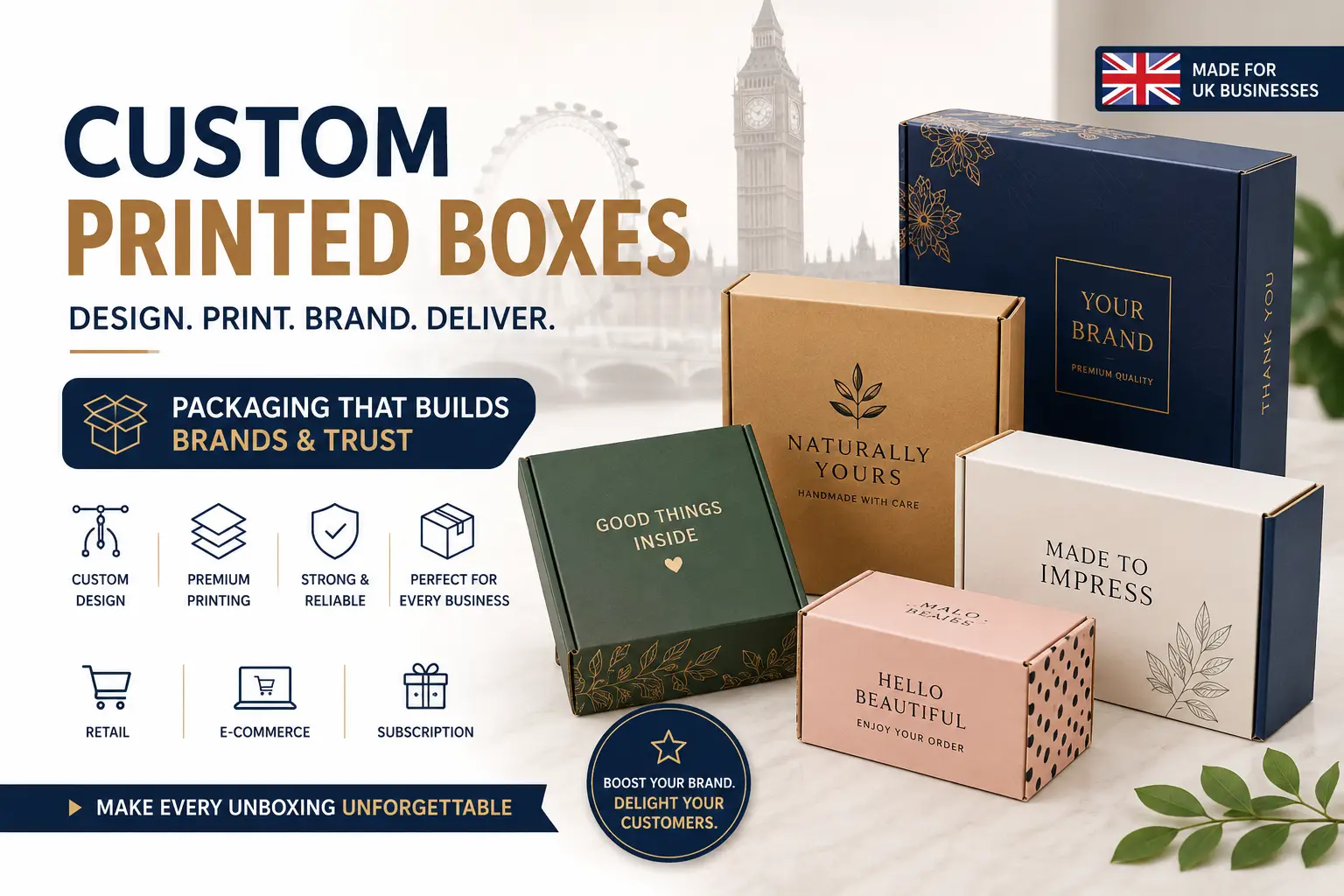
Custom gift boxes can include fitted inserts, sleeves, inside printing, foil, embossing, spot UV and different surface finishes.
CBD and Cannabis-Related Packaging
CBD packaging needs clear product identification and carefully reviewed wording.
Useful CBD packaging design ideas UK brands can consider include:
- Tamper-evident features
- Secure closures
- Batch and expiry areas
- Ingredient and usage panels
- Bottle inserts
- Child-resistant formats where required
- Clear separation between product variants
Do not make unapproved health claims on the packaging. Product type, ingredients, claims and sales channel can affect the rules that apply, so artwork should receive a compliance review before printing.
Beverage Packaging
Good Beverage packaging design ideas account for weight, condensation and movement.
Bottle and can packaging may need:
- Strong corrugated board
- Dividers
- Carry handles
- Reinforced bases
- Moisture-resistant surfaces
- Secure locking systems
- Clear orientation marks
Test carry handles with the full product weight. A handle that works on an empty sample may fail once several glass bottles are inside.
Shoe and Retail Packaging
Useful Shoe box packaging design ideas include ventilation, reinforced corners, easy-open lids and enough internal room to avoid pressing the product out of shape.
For supermarkets and other retailers, effective retail packaging ideas UK businesses use often include shelf-ready trays and display boxes. These formats can move from transport to display with less handling.
The outer packaging should be easy for staff to open without damaging the products or leaving rough edges on the shelf.
Packaging Printing Methods
The best printing method depends on quantity, material, colour requirements and budget.
| Printing method | Best suited to | Main benefit | Main trade-off |
| Digital printing | Samples and shorter production runs | Quick setup and detailed artwork | Unit costs may be higher at large volumes |
| Lithographic printing | Premium cartons and high-volume detailed designs | Sharp images and strong colour control | More setup is usually required |
| Flexographic printing | Corrugated boxes and larger runs | Efficient for simple, repeated designs | Less suited to highly detailed photographic artwork |
| Screen printing | Bold designs and specialist materials | Strong ink coverage | Limited for complex multi-colour artwork |
| Foil stamping | Logos and premium details | Creates a reflective luxury effect | Adds production cost |
| Embossing or debossing | Logos and textured brand elements | Adds a tactile finish | Fine details may not reproduce well |
Choose printing after the box structure and material. A finish cannot correct a weak box or an unsuitable layout.
Packaging Inserts That Add Real Value
Packaging inserts should have a practical purpose.
Protective inserts can:
- Hold products in place
- Separate glass items
- Support delicate components
- Present product sets neatly
- Reduce the need for loose filling material
Printed inserts can improve communication by including:
- Setup instructions
- Care information
- Thank-you messages
- Return guidance
- QR codes
- Discount codes
- Cross-sell suggestions
- Customer support details
Good packaging insert ideas improve the experience without creating clutter. A useful instruction card often adds more value than several promotional leaflets.
Recyclable vs Biodegradable Packaging
“Recyclable” and “biodegradable” do not mean the same thing.
Recyclable packaging can be collected and processed into new material where suitable systems exist.
Biodegradable packaging is designed to break down under certain conditions. Those conditions may not be available in a customer’s home, normal waste bin or local recycling system.
Before choosing an environmental claim, check:
- Which material is used
- Whether coatings affect recycling
- Whether different parts can be separated
- Which disposal route is available
- Whether the claim applies to the full package
- Whether customers receive clear instructions
A plain paper-based box with minimal mixed materials may be easier to recycle than a heavily laminated “eco” box.
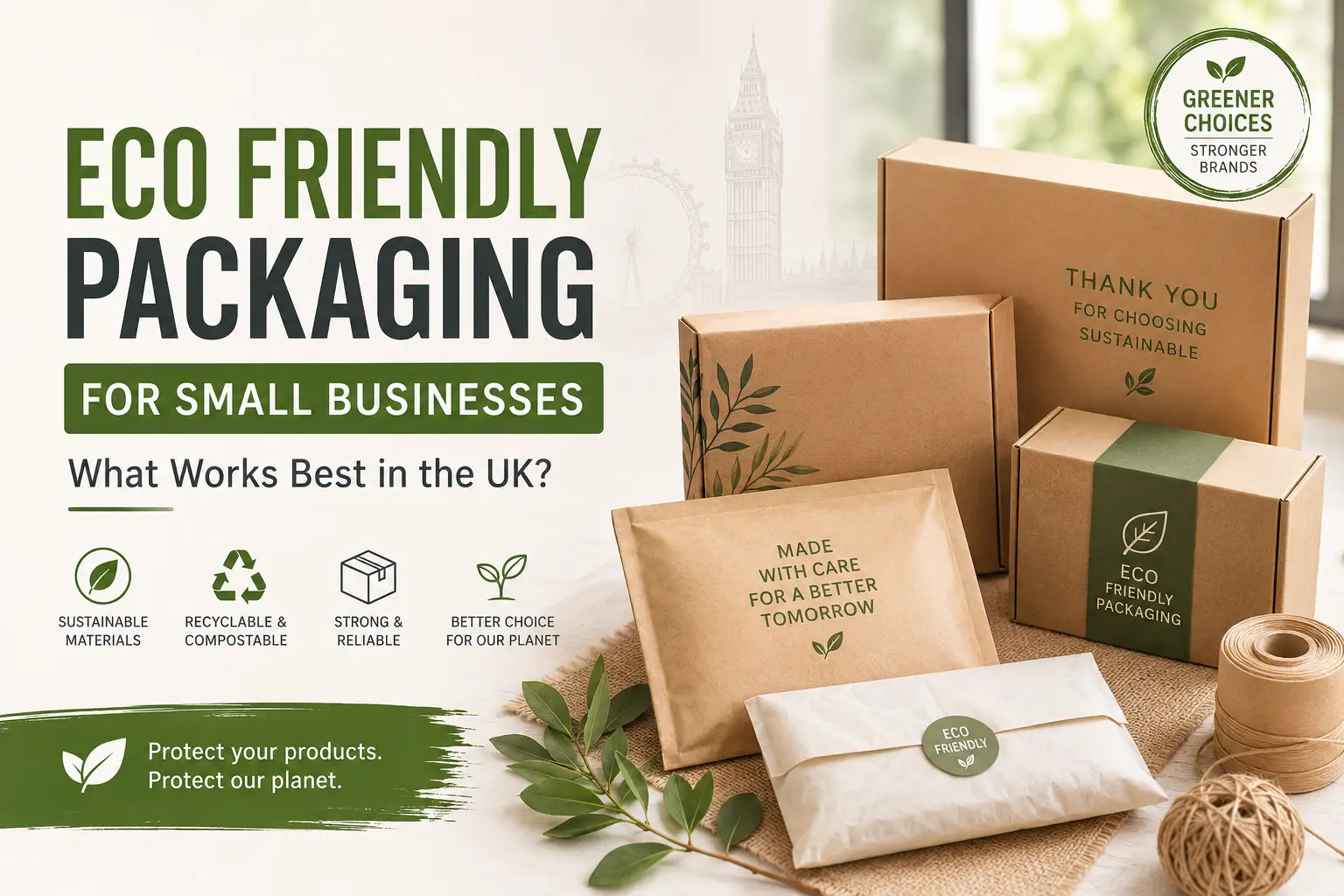
For sustainable packaging for small business UK brands, focus first on reducing unnecessary material, improving box fit and choosing structures that customers can dispose of correctly.
UK organisations that meet the relevant turnover and packaging-volume conditions may need to collect packaging data, report it and pay fees under extended producer responsibility rules. The obligations can apply to businesses that supply branded packaged goods, fill packaging, import packaged products or supply empty packaging.
Liable producers of certain household packaging must also assess and report its recyclability under the UK Recyclability Assessment Methodology.
Packaging Design Trends That Have Practical Value
The most useful packaging design trends UK businesses are adopting are connected to cost, usability and waste reduction.
Smaller, Better-Fitting Boxes
Reducing unused space can lower material use, void fill and storage needs. It can also improve product presentation.
Fewer Mixed Materials
Boxes that combine paper, plastic windows, magnets, foam and laminated surfaces may be harder to separate. Simpler structures can make disposal clearer for customers.
Modular Packaging
A standard box with a printed sleeve, sticker, or belly band allows brands to create seasonal designs without replacing the full packaging format.
Inside Printing
A simple message or pattern inside a mailer can create a memorable moment without covering every external panel in ink.
QR Codes
QR codes can move instructions, demonstrations, and detailed product information online. They should support essential printed information rather than replace legally required wording.
Return-Friendly Ecommerce Boxes
A second adhesive strip or resealable closure makes returns easier and reduces the need for customers to use a different box.
How Much Does Custom Packaging Cost in the UK?
There is no useful single average for Custom packaging cost in the UK because several choices affect the quotation.
The main cost factors are:
- Box dimensions
- Material type
- Board thickness
- Printing method
- Number of printed colours
- Surface coating
- Foil, embossing or spot UV
- Insert design
- Order quantity
- Sample requirements
- Assembly needs
- Delivery location
A premium finish may add less value than a better insert or stronger board. Spend first on the features that improve protection, packing speed, or customer use.
Ways to Control Packaging Costs
- Reduce unnecessary box dimensions
- Use a standard structure with custom printing
- Limit special finishes to key areas
- Combine products that can use the same box size
- Order enough to lower the unit cost without creating excess stock
- Use sleeves or stickers for short seasonal campaigns
- Test the design before full production
- Compare the total packed cost, not only the box price
The cheapest box per unit may not be the lowest-cost option overall. Include labour, storage, damage, returns, tape, void fill and delivery charges in the decision.
Common Custom Packaging Mistakes
Choosing Appearance Before Structure
Artwork cannot fix weak corners, poor closures or the wrong board grade.
Ordering Without a Physical Sample
Screens do not show board feel, colour variation, opening resistance or insert fit.
Using Oversized Boxes
Extra space increases filling material, movement and storage needs.
Adding Too Many Finishes
Foil, lamination, embossing and spot UV can compete rather than work together. One clear focal point is often more effective.
Ignoring Fulfilment Staff
The people assembling and packing the boxes often notice problems first. Ask them to test the sample.
Making Unsupported Environmental Claims
Words such as “green,” “eco-friendly” and “biodegradable” need clear evidence and context.
Treating Every Product Category the Same
Food, cosmetics, electronics and medical products have different risks. Packaging should reflect the product’s real journey.
How Custom Packaging Supports Sales
Packaging affects what customers expect before they use the product.
Well-planned custom packaging boxes UK businesses use can:
- Make the product feel more organised and professional
- Improve brand recognition
- Reduce visible shipping damage
- Support premium positioning
- Make gifts feel more considered
- Encourage customers to share the unboxing
- Improve confidence in an unfamiliar business
- Create space for useful instructions and repeat-purchase prompts
A strong unboxing experience does not require excessive layers. Clean presentation, easy opening and a product that arrives in the right position are often more memorable than decorative filler.
A Practical Supplier Checklist
Before approving a packaging order, ask the supplier:
- Which material and board grade suit the product weight?
- Can the dimensions be adjusted to reduce movement?
- Is a plain or printed sample available?
- Which printing method suits the order quantity?
- How will the finish affect recyclability?
- Are inserts available?
- What artwork format and bleed are required?
- Are there separate setup or tooling charges?
- What is the expected production lead time?
- How will the boxes be supplied and stored?
- Can the packaging be tested for ecommerce delivery?
- What happens if the final product dimensions change?
Clear answers help prevent expensive changes after production starts.
Build Packaging Around the Product
Good packaging begins with a clear understanding of what can go wrong.
A lightweight cosmetic carton, a corrugated ecommerce mailer and a rigid jewellery box may all look attractive, but they solve different problems. Choose the structure first. Then confirm the material, insert, printing method and finish.
OneStep CustomBoxes supplies made-to-measure packaging for businesses across the UK, including ecommerce, food, cosmetics, healthcare, retail and luxury product categories. Custom sizing, material options and free design assistance are available to help businesses prepare packaging before production.
Request a custom quote or discuss your product dimensions with the team to find a box that fits your product, operations and budget.
Frequently Asked Questions
1. What are custom boxes?
Custom boxes are packaging formats made around a business’s required dimensions, structure, material, printing and finish. They may include logos, product information, inserts, windows, handles or special closures.
2. Are custom boxes suitable for small businesses?
Yes. Custom boxes for small business UK brands can improve product protection and create a more consistent image. Small businesses should focus on versatile structures, sensible quantities and features that solve real packing or delivery problems.
3. What is the best material for custom boxes?
Corrugated board is often suitable for ecommerce and heavier products. Folding carton board works well for lightweight retail items. Rigid board is commonly used for premium gifts and jewellery. The best option depends on weight, fragility, sales channel and budget.
4. Can custom packaging be recyclable?
Many paperboard and corrugated formats can be recyclable, but coatings, plastic windows, foam, magnets and mixed-material inserts may affect the disposal route. Confirm the full material specification rather than judging the box by its appearance.
5. What information is needed for a custom packaging quote?
Prepare the product dimensions, product weight, preferred box style, order quantity, printing requirements, finish options, delivery location and any insert needs. Photos or a physical product sample may also help.
6. Should I choose a printed or plain sample?
A plain sample is useful for checking size, structure and product fit. A printed sample also helps assess colour, artwork position, text size and finish. For large or premium orders, checking both structure and print reduces risk.
7. How long does custom box production take?
Lead times depend on the box style, quantity, material, printing process, finishes and sample approval. Complex rigid boxes and detailed inserts normally require more production steps than simple printed cartons.
8. Do UK packaging regulations apply to small businesses?
The rules depend on the business’s activities, turnover, packaging volume, product category and location. Some businesses may have responsibilities under extended producer responsibility, workplace recycling, food safety, product labelling or sector-specific rules. Check current official guidance and obtain professional advice where necessary. In England, workplace recycling rules changed on 31 March 2025, while micro-firms have until 31 March 2027 to comply with the relevant separation requirements.