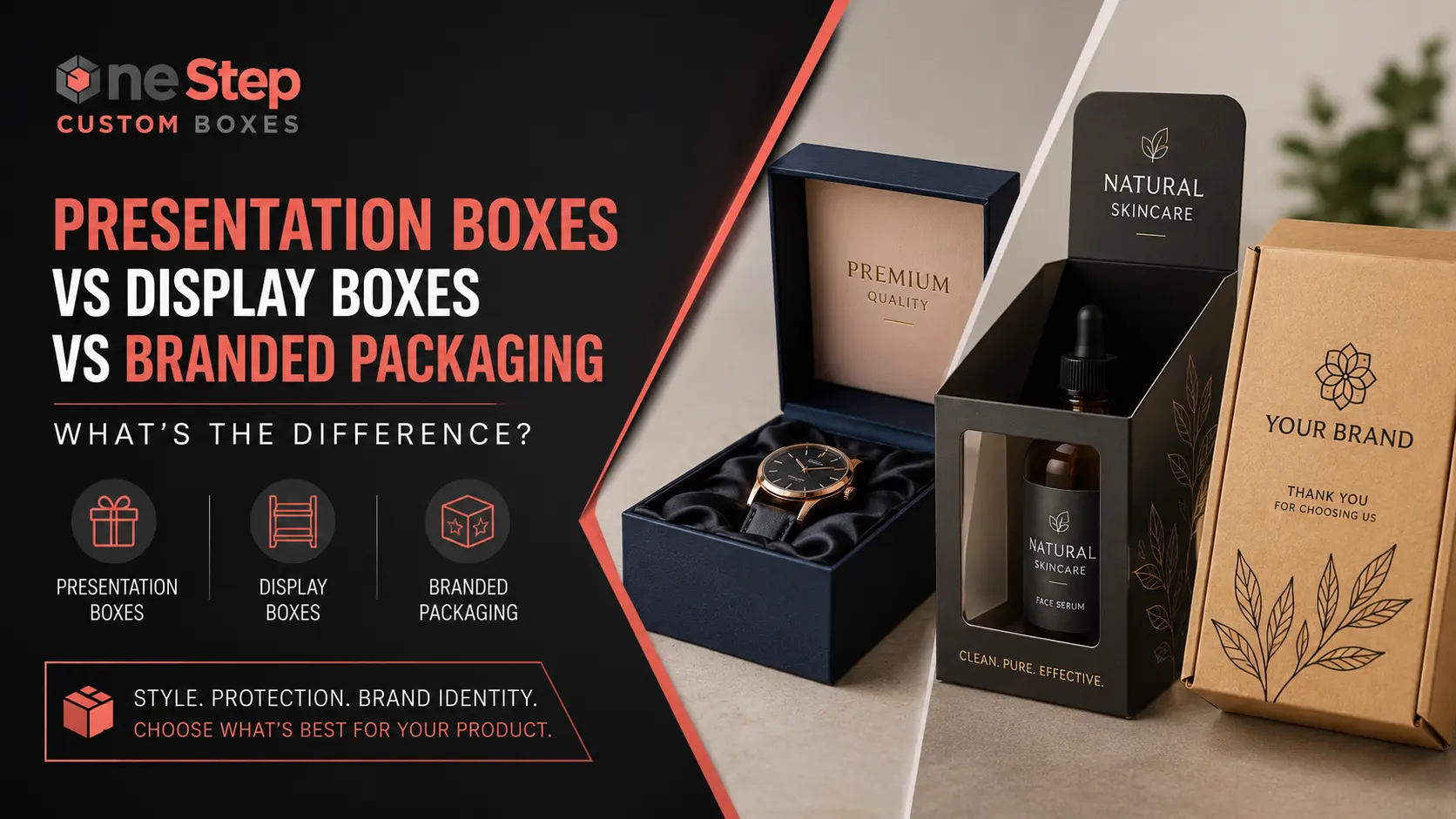
Choosing packaging is not simply about finding a box that fits your product. A presentation box, a display box, and branded packaging can all look attractive, but they solve different problems. The right option depends on where the product will be sold, how customers will see it, how it needs to travel, and the experience you want to create.
For a luxury gift, a presentation box may be the strongest choice. A retail product that needs to stand out on a shelf may work better in display packaging. An ecommerce brand, meanwhile, may need branded packaging that combines protection, presentation, and easy fulfilment.
Understanding those differences before ordering packaging can help you avoid paying for features you do not need—or choosing a box that does not suit the way your product is sold.
What Are Presentation Boxes?
Presentation boxes are packaging designed to make a product look polished, considered, and ready to present or give. They are commonly used for gifts, premium products, jewellery, cosmetics, promotional items, and special-edition products where the opening experience matters as much as basic protection.
Presentation boxes can use different structures and materials. Folding cardboard can provide a practical and lightweight solution, while rigid presentation boxes create a more substantial feel. Features such as magnetic closures, fitted inserts, sleeves, windows, embossing, foiling, and specialist coatings can further change the appearance and function.
The key purpose is presentation. The box should make the product feel organised and valuable rather than simply contained.
Common uses include:
- Jewellery and watches
- Beauty and cosmetic products
- Perfume and fragrance
- Corporate gifts
- Premium food and confectionery
- Product launch kits
- Promotional merchandise
- Limited-edition products
- Gift sets and hampers
OneStep CustomBoxes currently features Presentation Boxes within its gift packaging range, alongside other gift-focused formats such as personalised and book-style boxes.
Explore presentation and gift packaging options
What Are Display Boxes?
Display boxes are designed to show the product clearly, often while it is sitting on a retail shelf, counter, or other selling area. Their structure may include open sections, display windows, raised presentation areas, or formats that make the product easy to see without removing it completely from the packaging.
That changes the packaging priority. A presentation box usually focuses on the moment of opening. A display box often focuses on the moment before purchase.
For example, a retailer selling a small cosmetic product may want shoppers to see the product colour or shape immediately. A display structure can help achieve that without requiring the customer to open the package.
OneStep CustomBoxes offers a dedicated Display Packaging range with options including custom sizes, multiple paper stocks, printed finishes, and die-cut windows.
Presentation Boxes vs Display Boxes
| Factor | Presentation Boxes | Display Boxes |
| Main purpose | Product presentation and gifting | Product visibility and retail display |
| Customer interaction | Often opened as part of the experience | Often viewed before purchase |
| Typical setting | Gifts, premium products, launches | Shops, counters, shelves |
| Product visibility | May be limited until opening | Usually a major consideration |
| Common features | Lids, magnetic closures, inserts, luxury finishes | Windows, open fronts, display-friendly structures |
| Brand focus | Premium experience and perceived value | Recognition and shelf impact |
| Best suited to | Jewellery, gifts, luxury products | Retail products and promotional displays |
The two categories can overlap. A box can look premium and still include a window, while a display box can carry high-end branding. The difference comes down to what the structure is primarily designed to achieve.
Presentation Boxes vs Branded Packaging
These terms are not really direct alternatives.
Presentation boxes describe a type or purpose of packaging, while branded packaging describes packaging that carries a brand identity. A presentation box can be branded, and branded packaging can take many forms that are not presentation boxes.
Branded packaging may include:
- Printed logos
- Brand colours
- Custom graphics
- Product information
- QR codes
- Promotional messages
- Printed interiors
- Custom patterns
- Foil details and embossing
A standard mailer can therefore be branded. A rigid gift box can be branded. A retail carton can be branded. The word “branded” tells you more about the visual identity than the physical structure.
OneStep CustomBoxes offers branded packaging with materials such as corrugated board, rigid board, cardboard, Kraft and eco-focused stock, along with digital or offset printing, CMYK/Pantone options and finishes including matte, gloss, soft-touch, anti-scratch and spot UV.
See branded packaging options and finishes
What Are Presentation Boxes Used For?
Presentation boxes are most useful when the packaging needs to contribute to the perceived value of the product. They are particularly effective for products that are gifted, premium-priced, visually sensitive, or intended to create a memorable opening experience.
A jewellery company, for example, might choose a rigid box with a fitted insert so the item stays in place and looks carefully presented. A fragrance brand could use a high-quality printed carton for retail and a more elaborate presentation box for a limited-edition launch.
Presentation packaging also works well for:
Gifts
Gift packaging needs to look finished without requiring customers to add another layer of wrapping. A well-designed box can make the product feel ready for presentation.
Premium Products
Luxury products often benefit from packaging that feels substantial and deliberate. Rigid board, textured papers, magnetic closure boxes, foil stamping, and embossing can all contribute to that experience.
Product Launches
Launch kits and promotional boxes often contain several items. Bespoke packaging boxes with compartments or inserts can keep everything organised and create a strong reveal when the box is opened.
Corporate Gifting
Presentation boxes can help companies package multiple items in a consistent format for clients, employees, events, or campaigns.
Ecommerce Gifting
Online customers cannot inspect the packaging before purchasing. A thoughtfully designed presentation box can make the delivery feel more personal when the product arrives.
For ecommerce businesses, however, presentation should not come at the expense of protection. A premium presentation box may still need a protective outer shipping box for courier handling. OneStep CustomBoxes’ ecommerce packaging range specifically addresses the relationship between presentation, protection, inserts, and shipping requirements.
What Types of Presentation Boxes Are Available?
There is no single presentation box design that works for every product. The structure should follow the product dimensions, weight, level of protection required, opening experience, and selling environment.
Popular options include:
Rigid Presentation Boxes
Rigid presentation boxes use thicker board to create a firm structure and a more substantial feel. They are often considered for premium products, luxury gifts, jewellery, cosmetics, and special editions.
Magnetic Closure Boxes
Magnetic closure boxes offer a clean opening mechanism and can create a more premium experience. They are useful when the act of opening the package is part of the product presentation.
Lid and Base Boxes
A traditional lid-and-base structure is simple, versatile, and suitable for many gift and premium product applications.
Book-Style Boxes
These open in a similar way to a book and provide a broad area for printed branding, messaging, or product information.
Drawer-Style Boxes
Drawer packaging creates a different opening experience and can work well for jewellery, beauty products, accessories, and gift sets.
Window Presentation Boxes
A die-cut or transparent window allows customers to see part of the product without fully opening the packaging.
Folding Cardboard Presentation Boxes
Cardboard presentation boxes can provide a practical balance between cost, printability, storage, and appearance. They are often more suitable when businesses need larger production quantities or lighter packaging.
The best structure is rarely the one with the most features. It is the one that supports the product without creating unnecessary cost, material use, or packing complexity.
How to Choose Presentation Boxes for Your Product
Start with the product rather than the box. Measure the item’s length, width, and height, then consider weight, fragility, accessories, inserts, shipping requirements, and how the customer will receive or display it.
A useful decision process is:
- Measure the product accurately. Include caps, handles, lids, attachments and other parts that affect the final footprint.
- Decide how the box will be used. Separate gift presentation, retail display and shipping requirements.
- Choose the appropriate material. The board should provide enough strength for the product without adding unnecessary weight.
- Plan the internal fit. Inserts and dividers can stop movement and improve presentation.
- Choose the opening style. Decide whether a simple lid, drawer, book opening or magnetic closure suits the customer experience.
- Consider branding. Logo placement, colour, typography and printed messaging should support the product rather than overwhelm it.
- Select finishes carefully. Foiling, embossing, spot UV, lamination and textured papers can add detail, but each should have a clear purpose.
- Check storage and fulfilment. A beautiful box is less useful if it takes too long to assemble or occupies excessive warehouse space.
OneStep CustomBoxes offers custom sizes and styles, various paper stocks, printing options, and finishing choices, which can be useful when packaging needs to be built around a specific product rather than selected from a fixed size range.
Explore custom-made box options
What Is the Best Material for Presentation Boxes?
The best material depends on the product, desired appearance, required strength, budget, storage conditions, and whether the box will be used for shipping. There is no single material that is best for every presentation box.
Cardboard
Cardboard is versatile and works well for printed retail and gift packaging. It can provide a clean surface for colours, illustrations, logos, and product information.
Kraft
Kraft board is often chosen for a natural visual style and can suit brands that want a simpler, less polished aesthetic. It can also work well for gift and lifestyle products.
Rigid Board
Rigid board is commonly used when a stronger, more substantial presentation is required. It can support premium structures and luxury packaging solutions where the feel of the box matters.
Corrugated Board
Corrugated packaging is more closely associated with transit protection. It is often the better choice for outer shipping packaging, especially for heavier or fragile ecommerce orders.
The important distinction is that presentation material and shipping material do not always need to be the same. A premium rigid box inside a protective corrugated shipping carton can provide both a high-quality unboxing experience and appropriate transit protection.
Do Presentation Boxes Need Inserts?
They do not always need inserts, but box inserts can improve both product protection and presentation when the item needs to stay in a precise position.
Inserts can be useful for:
- Jewellery
- Bottles
- Glass products
- Cosmetics
- Electronics
- Gift sets
- Multiple-piece products
- Promotional kits
An insert can prevent an item from moving around inside the box. It can also create separate spaces for accessories and make the contents easier to understand when the lid opens.
The insert should be designed around the actual product. If the fit is too loose, movement remains a problem. If it is too tight, inserting and removing the product can become frustrating.
How Branding Changes Presentation Packaging
A good branded box does more than place a logo on a lid. Branding works best when the structure, colours, typography, materials and finishing choices all support the same visual identity.
For example, a premium skincare brand might choose a rigid presentation box with restrained typography, soft-touch lamination and a small foil detail. A handmade food brand may prefer Kraft board, simple graphics, and minimal finishing.
Branding can appear on:
- Exterior panels
- Interior panels
- Sleeves
- Inserts
- Tissue or wrapping
- Stickers and labels
- Thank-you messages
- Product information cards
The goal is consistency. A heavily decorated box is not automatically stronger branding. A clear logo, recognisable colour palette, good typography and a suitable material can often create a more professional result.
Presentation Packaging Ideas for Different Businesses
Different products need different packaging priorities. A useful starting point is to match the box to the buying and unboxing experience.
| Business type | Suitable approach | Features to consider |
| Jewellery | Premium presentation box | Inserts, rigid board, magnetic closure, foil |
| Cosmetics | Printed presentation packaging | Sleeves, inserts, spot UV, custom sizes |
| Perfume | Luxury presentation box | Bottle support, rigid board, embossing, foil |
| Gifts | Presentation gift boxes | Lids, sleeves, custom print, tissue compatibility |
| Ecommerce | Branded product packaging | Inserts, protective outer box, printed messaging |
| Retail | Display packaging | Windows, shelf visibility, clear branding |
| Corporate gifting | Bespoke presentation box | Compartments, premium finishes, internal printing |
| Food gifts | Printed or Kraft packaging | Product fit, food-suitable structure, clear branding |
For Jewellery brands, OneStep CustomBoxes provides options including rigid, Kraft, printed, branded, and recyclable jewellery packaging, with formats for rings, necklaces, earrings, bracelets and gift sets.
Explore custom jewellery packaging options
Common Mistakes to Avoid
Choosing packaging based only on appearance can create operational problems later. A few issues are especially common.
Choosing the box before measuring the product: This can leave excessive space or make the finished package too tight.
Treating presentation packaging as shipping packaging: A luxury presentation box may not provide enough protection for direct courier transit.
Using too many finishes: Foil, embossing, UV and special laminations can all be effective, but combining every available option can make the design feel crowded.
Ignoring the packing process: A complicated structure may look impressive but slow down fulfilment.
Forgetting the inside of the box: Customers see the interior immediately after opening. Printed panels, inserts and messages can make that space part of the brand experience.
Using a generic insert: A poorly fitted insert can undermine an otherwise premium box.
Overlooking storage: Larger rigid formats can require more warehouse space, so packaging decisions should include the full operational picture.
Which Option Should You Choose?
There is no universal winner. Choose presentation boxes when the opening experience and perceived value are priorities; choose display boxes when product visibility and retail presentation matter most; choose branded packaging when consistent brand identity is the main requirement.
In many cases, these choices can work together.
A beauty company might use branded display packaging in a shop, branded presentation boxes for premium gift sets, and branded ecommerce packaging for online orders. A jewellery business could use a rigid presentation box for the product and a separate protective mailer for delivery.
The most effective packaging strategy is therefore based on the complete customer journey rather than a box name alone.
A simple decision rule
Choose presentation boxes when:
- The product is gifted or premium.
- The opening experience matters.
- You need a refined, structured presentation.
- Inserts or special closures add value.
Choose display boxes when:
- Product visibility is important before purchase.
- The packaging will sit on shelves or counters.
- A window or open structure helps shoppers assess the product.
Choose branded packaging when:
- Brand recognition is a priority.
- You want consistent colours, logos and messaging.
- Packaging needs to support ecommerce, retail, shipping or promotional campaigns.
For many UK businesses, the final solution combines two or more of these approaches. The box may provide presentation, the printing may provide branding, and a separate outer package may provide transit protection.
Make the Right Choice for Your Product Packaging
Presentation boxes, display boxes, and branded packaging overlap, but they are not interchangeable terms. Presentation boxes focus on how a product is presented and opened, display boxes focus on visibility and retail presentation, and branded packaging focuses on communicating the identity of the business.
The right choice comes down to the product, selling channel, customer experience, protection requirements, and fulfilment process. Once those factors are clear, selecting the material, structure, insert, printing and finishes becomes much easier.
For UK brands comparing packaging formats, OneStep CustomBoxes provides custom packaging across retail, ecommerce, gifting, beauty, jewellery and other product categories, with options for custom dimensions, materials, printing and finishing.
A carefully planned box should do more than look good. It should fit the product, suit the way it is sold, support the brand and make sense for the people who pack, ship and receive it.
Frequently Asked Questions
1. Are presentation boxes and display boxes the same?
No. Presentation boxes are generally designed around product presentation and the opening experience, while display boxes are usually designed to make products visible in retail or selling environments. Some packaging can perform both roles.
2. Are presentation boxes suitable for ecommerce?
Yes, but the presentation box may not be sufficient as the only shipping layer. Fragile or premium products may benefit from a presentation box inside protective shipping packaging.
3. Are rigid presentation boxes better than cardboard boxes?
Not necessarily. Rigid boxes offer a more substantial structure and can suit luxury applications, while cardboard presentation boxes can be lighter, easier to store, and more practical for many products. The best choice depends on the product and intended use.
4. Can presentation boxes be customised with a logo?
Yes. Presentation boxes can use printed logos, brand colours, patterns, foil stamping, embossing, debossing, spot UV, and other finishing techniques depending on the material and construction.
5. What products work best in presentation boxes?
Common applications include jewellery, watches, cosmetics, fragrances, gifts, premium food products, promotional kits, and limited-edition items. The box should always match the product’s size, weight, and handling needs.
6. Do presentation boxes need inserts?
Not always. Inserts are most useful when the product needs extra support, separation or positioning. They are particularly helpful for jewellery, bottles, electronics and multi-item gift sets.
7. Can presentation boxes be used as branded packaging?
Yes. Presentation boxes can be fully branded through printed artwork, logos, colours, interior graphics and finishing. In that case, the packaging serves both a presentation purpose and a branding purpose.