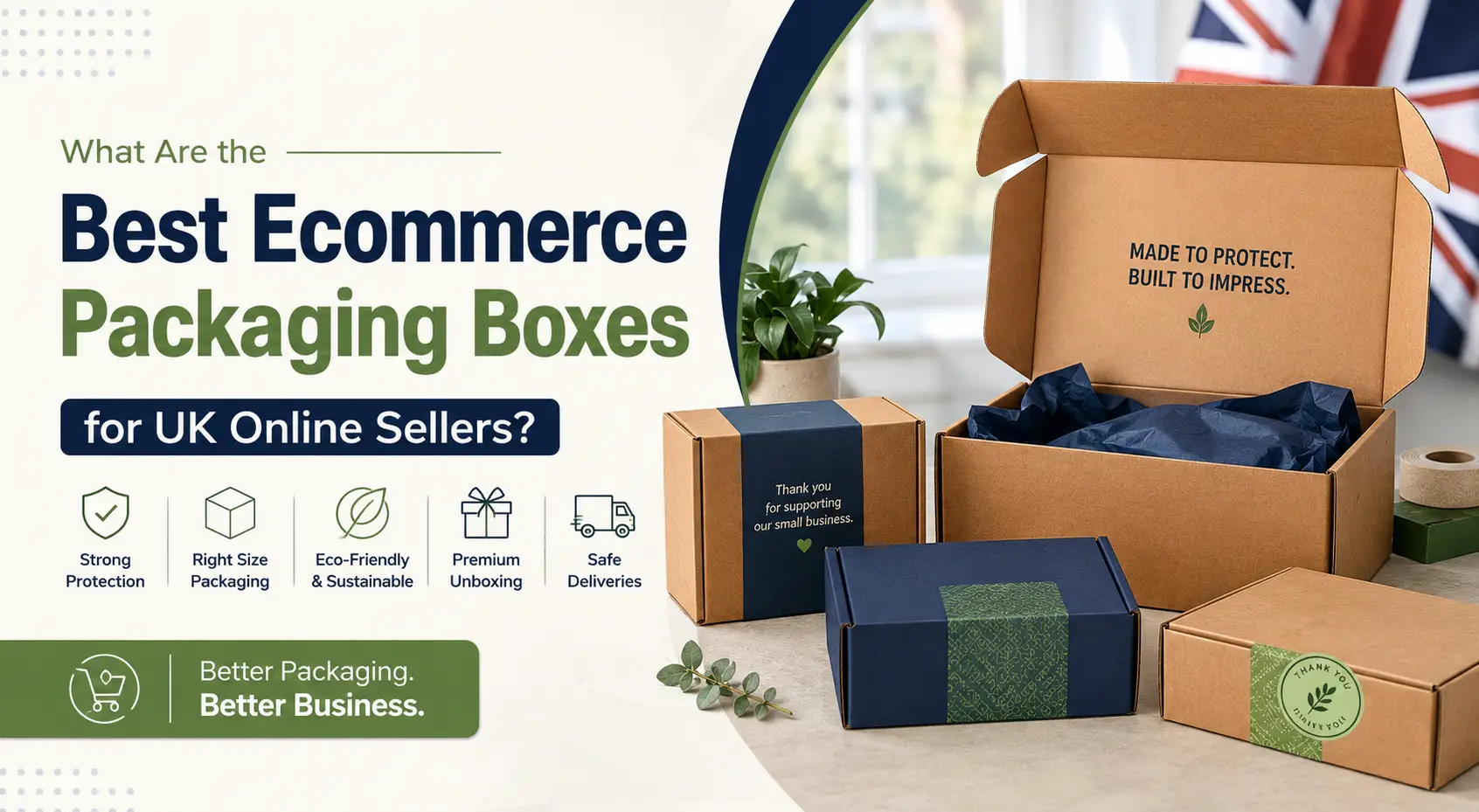
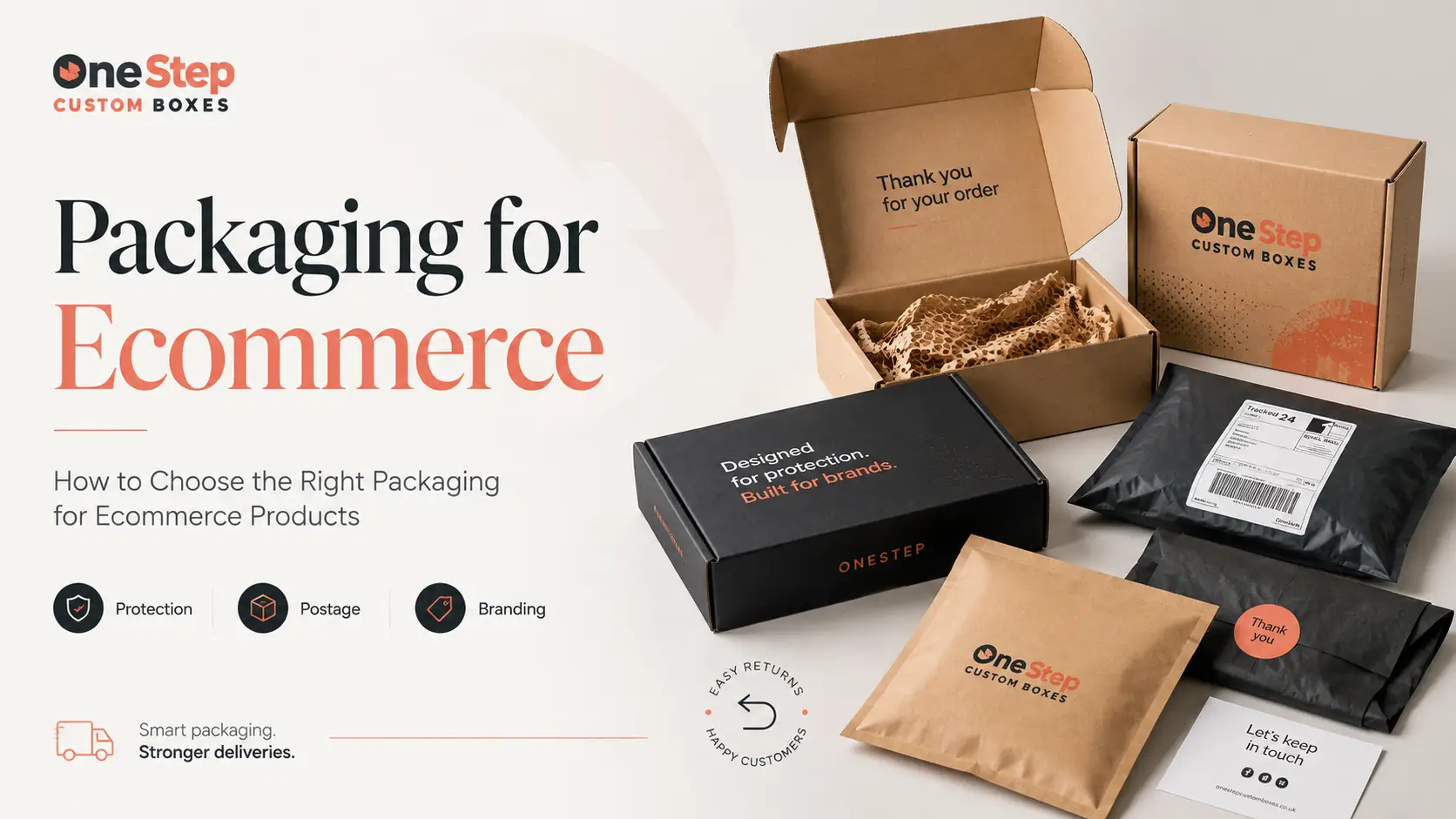
Choosing the right packaging for ecommerce means balancing product protection, postage cost, presentation, sustainability, and customer experience. A box that looks impressive but wastes space can increase shipping costs. A lightweight option that offers too little protection may lead to damaged orders and costly replacements.
The best choice starts with the product itself. Its size, weight, fragility, value, and delivery journey should decide the packaging—not appearance alone. For UK online sellers, carrier size limits and return requirements also matter before a packaging format is ordered in bulk.
What Does Good Ecommerce Packaging Need to Do?
Good ecommerce packaging should protect the product throughout handling and delivery while using no more material or space than necessary. It should also be easy to pack, suitable for the delivery service, simple for customers to open, and practical to recycle or reuse wherever possible.
Unlike packaging used mainly on a retail shelf, e-commerce packaging goes through sorting hubs, delivery vehicles, stacking, drops, vibration, and changing weather conditions. That means the outer pack has a job to do.
Effective packaging for online orders should:
- Keep the product from moving excessively.
- Protect corners, surfaces, and fragile parts.
- Survive normal handling during delivery.
- Fit within suitable carrier size and weight bands.
- Be quick for fulfilment teams to assemble.
- Avoid unnecessary space.
- Give customers a clean opening experience.
- Support returns where the product is commonly sent back.
These requirements explain why ecommerce packaging design should begin with function and then move towards branding.
Start With the Product, Not the Packaging Style
The right packaging is determined first by what you are sending. Two products of similar dimensions can require very different packs if one is lightweight clothing and the other is a glass cosmetic bottle.
Before comparing ecommerce packaging ideas, record the packed dimensions, weight, fragility, surface sensitivity, product value, and number of items normally placed in each order. Then consider whether the item already has retail packaging or whether the ecommerce box will provide its main protection.
Check Size and Weight
Measure the product at its widest, longest, and deepest points. If several products regularly ship together, also measure a typical complete order.
Avoid choosing an oversized box simply because it gives you flexibility. Extra internal space often means more cushioning, more storage space, slower packing, and a larger parcel.
For businesses with several product sizes, a small range of carefully selected box dimensions can often work better than one oversized box used for everything.
Consider Fragility
A jumper, a paperback book, a candle jar, an electronic device, and a jewellery item all respond differently to movement and impact.
Fragile products may need:
- Corrugated outer boxes
- Cardboard dividers
- Paper cushioning
- Protective inserts
- Corner protection
- Tissue or surface wrapping
The aim of protective packaging for shipping is not to fill every empty area. It is to control movement and protect the places most likely to be damaged.
Think About Product Value
Higher-value products usually need more than basic physical protection. Tamper resistance, presentation, secure closures, and discreet outer packaging may also matter.
A premium watch, for example, may use a presentation box inside a plain corrugated shipping carton. The customer still gets a premium experience without making the contents obvious during transport.
Which Type of Ecommerce Packaging Should You Choose?
There is no single best ecommerce box for every business. Mailer boxes suit many branded consumer products, corrugated shipping boxes provide stronger transport protection, mailing bags work well for soft goods, and rigid boxes are normally used as presentation packaging rather than the only shipping container.
| Packaging Type | Best For | Main Benefit | Main Limitation |
| Corrugated shipping boxes | Fragile, heavy or mixed orders | Strong transport protection | May need tape and void fill |
| Mailer boxes | Clothing, gifts, cosmetics and subscriptions | Good balance of protection and presentation | Not ideal for every heavy product |
| Postal boxes | Small ecommerce orders | Compact and easy to pack | Size range must match products closely |
| Paper mailing bags | Clothing and soft goods | Lightweight and space-efficient | Limited crush protection |
| Padded mailers | Small, light products | Built-in cushioning | Less suitable for bulky products |
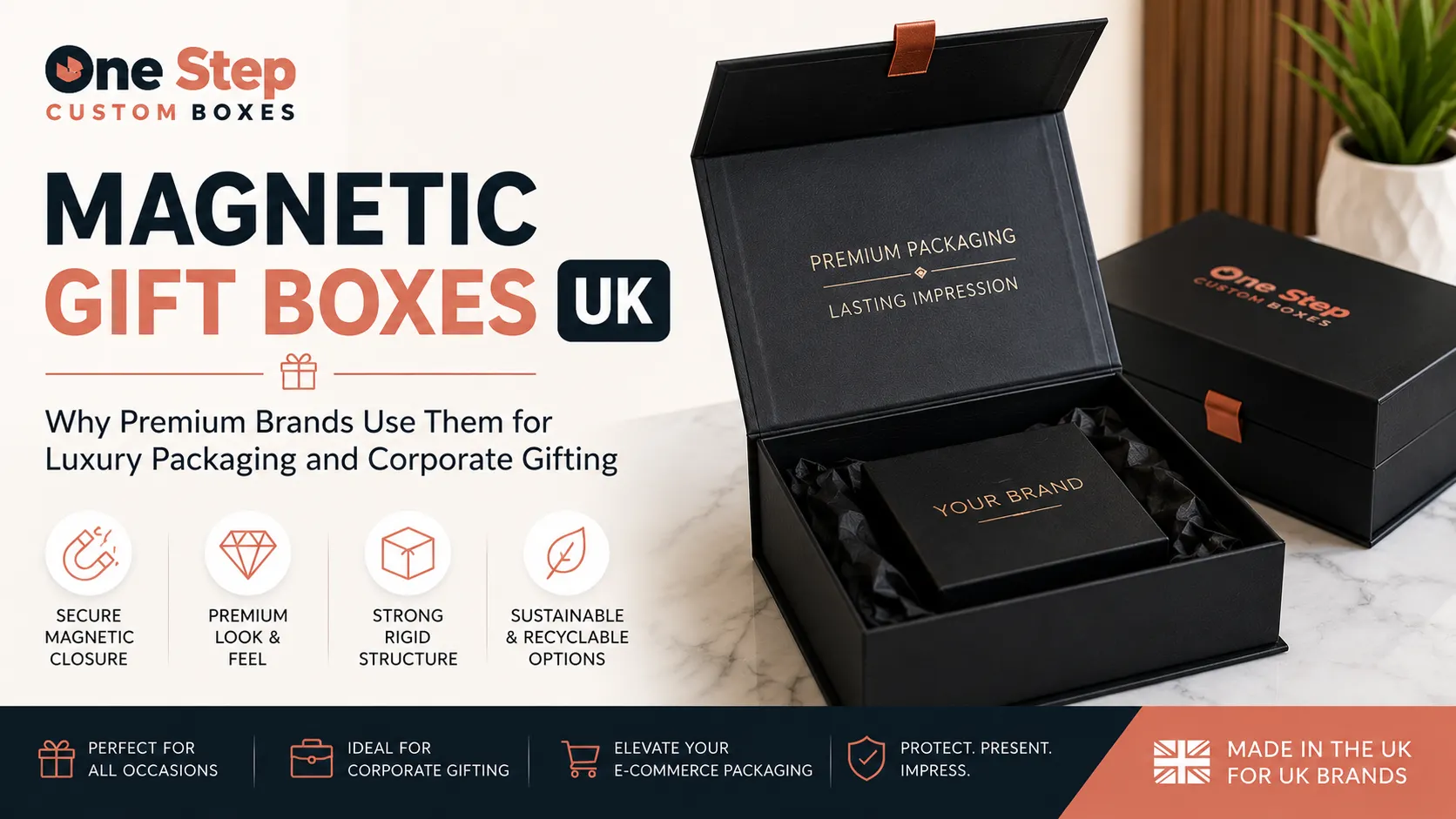
| Rigid presentation boxes | Luxury and gift products | Premium customer experience | Usually needs separate shipping protection |
If you are still comparing formats, the breakdown of the Best ecommerce packaging boxes for UK online sellers covers common box styles in more detail.
Single Wall vs Double Wall Boxes: Which Is Better?
Single-wall corrugated boxes use one fluted layer between liner boards and suit many lightweight or moderately protected orders. Double-wall boxes use two fluted layers, making them more resistant to compression and demanding transport conditions. The stronger option is not automatically the better option for every ecommerce order.
Choosing between single-wall vs double-wall boxes depends on several factors:
Single-wall boxes can work well for:
- Clothing
- Lightweight packaged goods
- Small household products
- Products already protected by their retail packaging
Double wall boxes are more useful for:
- Heavier goods
- Fragile products
- Multiple items packed together
- Products exposed to greater stacking pressure
- Longer or more demanding delivery journeys
Using double wall board for a lightweight, non-fragile item can add material and cost without giving the customer a meaningful benefit. Packaging specification should match the risk.
Choose the Right Size Before You Think About Branding
Right-size packaging keeps the product secure with enough room for necessary protection but avoids large areas of unused space. It can reduce the amount of cushioning required, make cartons easier to store, and help businesses avoid paying for parcel dimensions they do not actually need.
A simple packaging size guide starts with three measurements:
- Measure the product or complete order.
- Add only the space needed for inserts or protective material.
- Measure the final outer dimensions of the closed parcel.
That last point matters. Delivery companies assess the parcel you send, not just the product inside it.
Check Royal Mail Parcel Limits
For UK sellers using Royal Mail, the current Small Parcel limit is 2 kg with maximum dimensions of 45 cm × 35 cm × 16 cm. Royal Mail lists Medium Parcels up to 20 kg and 61 cm × 46 cm × 46 cm.
These limits make the Royal Mail parcel size guide worth checking before finalising packaging dimensions, especially if a few extra centimetres could move an order into another size category.
Carrier services and prices can change, so check the latest Royal Mail measurements and rates when creating or changing your packaging specification. Royal Mail published updated 2026 pricing information effective from 1 July 2026.
How Do You Prevent Products Getting Damaged in Transit?
Preventing shipping damage requires two layers of control: a strong enough outer package and enough internal protection to stop harmful movement. A sturdy box alone will not protect a fragile item that can slide from side to side, while excessive cushioning cannot rescue an outer carton that is too weak.
Start with a simple movement test. Pack the product as it would be sent, close the box, and move it gently in different directions. If the contents shift significantly, improve the fit or internal support.
Common protection methods include:
- Corrugated dividers for multiple products
- Paper padding around fragile items
- Moulded or die-cut inserts for fixed positioning
- Edge and corner protection
- Tissue for delicate surfaces
- Padded envelopes for suitable small products
Void fill packaging should solve a specific problem. Use enough to prevent movement, rather than automatically filling every available centimetre.
For fragile products such as candles, the packing method can matter as much as the carton. The same principles are shown in these practical tips for Packaging candles safely for shipping.
Build the Unboxing Experience Around the Customer
A good unboxing experience makes an order feel organised, intentional, and easy to open. It does not require elaborate packaging. Correct sizing, clean printing, tidy product placement, sensible inserts, and an opening method that does not frustrate the customer can make a stronger impression than unnecessary decorative layers.
Branded ecommerce packaging can include:
- Printed mailer boxes
- A logo on the outer or inner panel
- Brand colours
- Tissue paper
- Thank-you cards
- Product care instructions
- QR codes for useful product information
- Return instructions
Useful Packaging inserts for small business should earn their place inside the parcel. A care card, fitting guide, discount for a future purchase, or clear returns note provides more value than an insert added only to make the parcel look fuller.
For businesses considering printed packaging, Custom printed boxes can combine shipping function with consistent branding without requiring several additional decorative elements.
How Sustainable Should Ecommerce Packaging Be?
Sustainable ecommerce packaging should use an appropriate amount of material, protect the product well enough to prevent avoidable replacements, and favour packaging that can realistically be reused or recycled. Simply replacing one material with another does not make a packaging system sustainable if the new pack is oversized or performs poorly.
Practical ways to improve recyclable packaging for online orders include:
- Reduce unnecessary space.
- Use fewer mixed materials where possible.
- Avoid decorative components that serve no useful purpose.
- Choose packaging that protects the product on the first delivery attempt.
- Give customers clear disposal information where appropriate.
- Review whether reusable packaging makes sense for frequent returns.
UK packaging responsibilities are also evolving. Under extended producer responsibility for packaging, organisations that meet the relevant criteria may have packaging-data reporting and fee obligations. GOV.UK advises affected businesses to determine what packaging data they need to collect and report.
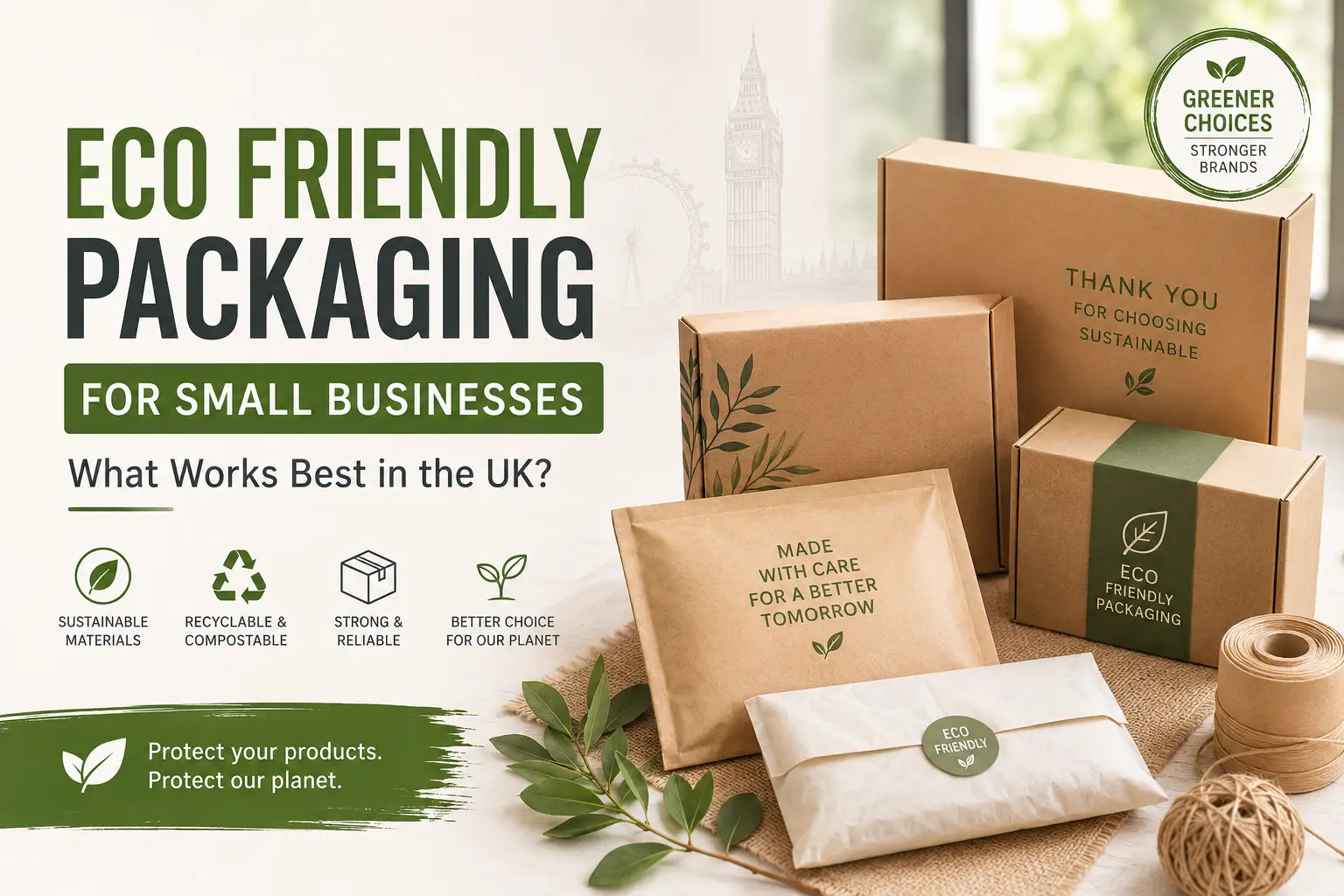
Small businesses exploring practical alternatives can also compare Eco-friendly packaging options for UK businesses.
How Can Ecommerce Businesses Reduce Packaging Costs?
Reducing ecommerce packaging costs is usually about removing waste from the whole fulfilment process rather than simply buying the cheapest box. Packaging price, labour, storage, cushioning, damaged orders, and postage can all affect the real cost of sending one successful order.
Start by reviewing these areas:
Reduce the Number of Box Sizes Carefully
Too many packaging sizes increase stock complexity. Too few can create oversized parcels.
Look at your order data and find groups of products that can safely share the same packaging dimensions.
Right-Size Regular Orders
A smaller outer pack can use less cardboard and require less void fill packaging. Depending on your carrier and service, it may also help reduce postage costs with packaging that stays within a more suitable size band.
Do not shrink the box so much that protection is compromised. One damaged replacement order can remove the savings made across several parcels.
Make Packing Faster
Complicated boxes, excessive tape, multiple inserts, and too many wrapping stages increase packing time.
For regular ecommerce fulfilment, test how quickly a pack can be:
- Stored
- Assembled
- Filled
- Sealed
- Labelled
- Opened by the customer
A slightly higher unit cost can sometimes make sense if the packaging significantly reduces fulfilment time or product damage.
Plan Ecommerce Returns Before the First Order Ships
Ecommerce returns packaging should allow customers to send suitable products back without improvising with tape, carrier bags, or another oversized box. This is especially relevant for clothing, footwear, accessories, and other categories where size or preference can cause regular returns.
Consider whether the original pack can be opened without destroying it.
Useful return-friendly features include:
- Tear strips for easy opening
- Secondary adhesive strips for resealing
- Durable mailer boxes
- Reusable mailing bags
- Clear return instructions
- Space for a new shipping label
The trade-off is material use. Adding return features to every parcel makes most sense when customers are genuinely likely to use them.
Common Ecommerce Packaging Mistakes to Avoid
Most packaging problems come from choosing a format before understanding the complete delivery process. Oversized boxes, weak materials, excessive inserts, poor closures, and designs that ignore carrier restrictions can all create costs that are difficult to see when comparing box prices alone.
Watch for these common mistakes:
- Using one box for every product. A box that fits your largest item may waste space on smaller orders.
- Ignoring internal movement. Fragile items need positioning, not just a strong outer carton.
- Choosing appearance over protection. Printed packaging still needs to survive delivery.
- Overpackaging inexpensive products. Customers may see excessive material as waste rather than added value.
- Ignoring final parcel measurements. Carrier limits apply after the product is packed.
- Adding too many branding elements. A clean printed box can often replace several separate branded materials.
- Forgetting returns. Packaging may need to survive two journeys rather than one.
- Ordering large quantities before testing. Test fit, packing speed, closures, and protection first.
A Practical Ecommerce Packaging Checklist
A packaging decision becomes much easier when each option is tested against the same practical questions. The best format is usually the one that protects the order reliably, fits the fulfilment workflow, stays sensible for postage, and gives customers a clean experience without unnecessary materials.
Before ordering packaging, check:
- Product length, width, depth, and weight
- Typical number of products per order
- Fragility and likely impact points
- Required internal protection
- Final packed parcel dimensions
- Relevant delivery carrier limits
- Box strength for product weight
- Assembly and packing time
- Sealing method
- Branding requirements
- Recycling or reuse options
- Customer opening experience
- Return requirements
- Storage space for packaging stock
- Cost per successfully delivered order
Choose Packaging Around the Whole Delivery Journey
The right packaging for ecommerce is not simply the box that fits the product. It must work from the packing bench to the customer’s door—and sometimes all the way back through a return.
Start with product protection and accurate dimensions. Then compare material strength, postage limits, packing time, sustainability, branding, and returns. This approach makes packaging for online business easier to scale because every packaging choice has a clear purpose.
For businesses comparing custom sizes, printed finishes, and ecommerce box formats, OneStep CustomBoxes can help you compare packaging options around the products you actually send rather than choosing a box based on appearance alone.
Frequently Asked Questions
1. What is the best packaging for an ecommerce business?
The best packaging depends on what the business sells. Corrugated boxes suit heavier or fragile products, mailer boxes work well for many consumer goods, and mailing bags can be efficient for clothing and soft products. Product protection, parcel dimensions, packing speed, postage, and returns should all influence the decision.
2. How do I choose packaging for my products?
Measure the product, check its weight and fragility, decide how much internal protection it needs, and then choose the smallest practical outer package. Test the completed parcel before ordering large quantities. The packaging should prevent harmful movement without creating unnecessary space.
3. What packaging is best for a small online business?
Ecommerce packaging for small businesses should be simple to store, fast to assemble, protective, and available in quantities that match order volume. Small businesses often benefit from a limited range of versatile box sizes rather than holding many similar packaging formats.
4. How much space should be left inside a shipping box?
There is no universal measurement because different products need different protection. Leave enough room for necessary cushioning or inserts but avoid large empty areas. Fragile products may require more controlled clearance, while soft or already-boxed products may need very little.
5. Is a mailer box suitable for shipping?
Mailer boxes can be suitable for many ecommerce products if the board strength, dimensions, closure, and internal protection match the item being sent. Heavy, highly fragile, or unusually shaped products may need a stronger corrugated shipping carton instead.
6. Does smaller packaging reduce postage costs?
It can. Many delivery services use parcel dimensions and weight when determining applicable services or charges. Keeping packaging appropriately sized can help an order remain within a suitable parcel category, but businesses should always check the current rules of their chosen carrier.
7. Is recyclable packaging always better?
Not automatically. Packaging also has to protect the product. A recyclable pack that fails during delivery can result in a damaged item, replacement product, and another shipment. A better approach is to use an appropriate amount of packaging that performs reliably and can be recycled through realistic waste streams where possible.
8. Should ecommerce packaging be branded?
Branding can be worthwhile where presentation, repeat purchases, gifting, or customer recognition matter. It does not need to cover every surface. A well-designed printed box, mailer, insert, or internal print can create a clear brand experience without adding several unnecessary packaging components.