Choosing the right burger packaging is not only about fitting a burger inside a box. The wrong size can affect presentation, food quality, delivery performance, and customer experience. A box that is too small can crush toppings and make the burger look messy, while an oversized box can make food move around and lose heat quickly.
For restaurants, cafes, food trucks, and takeaway businesses across the UK, understanding burger box sizes helps create better packaging decisions. The right burger box should protect the product, maintain freshness, support branding, and handle the demands of takeaway and delivery services.
Why Choosing the Right Burger Box Size Matters
A burger is a product where appearance and texture directly influence customer satisfaction. When customers open a takeaway order, the packaging is the first thing they notice before tasting the food.
The correct box size helps businesses:
- Protect burgers during transport
- Keep ingredients properly positioned
- Reduce heat loss during delivery
- Prevent sauces and grease from leaking
- Improve the overall customer experience
- Create a professional brand image
Many food businesses focus on the burger recipe but overlook packaging dimensions. However, even a high-quality burger can lose its appeal if it arrives compressed, cold, or damaged.
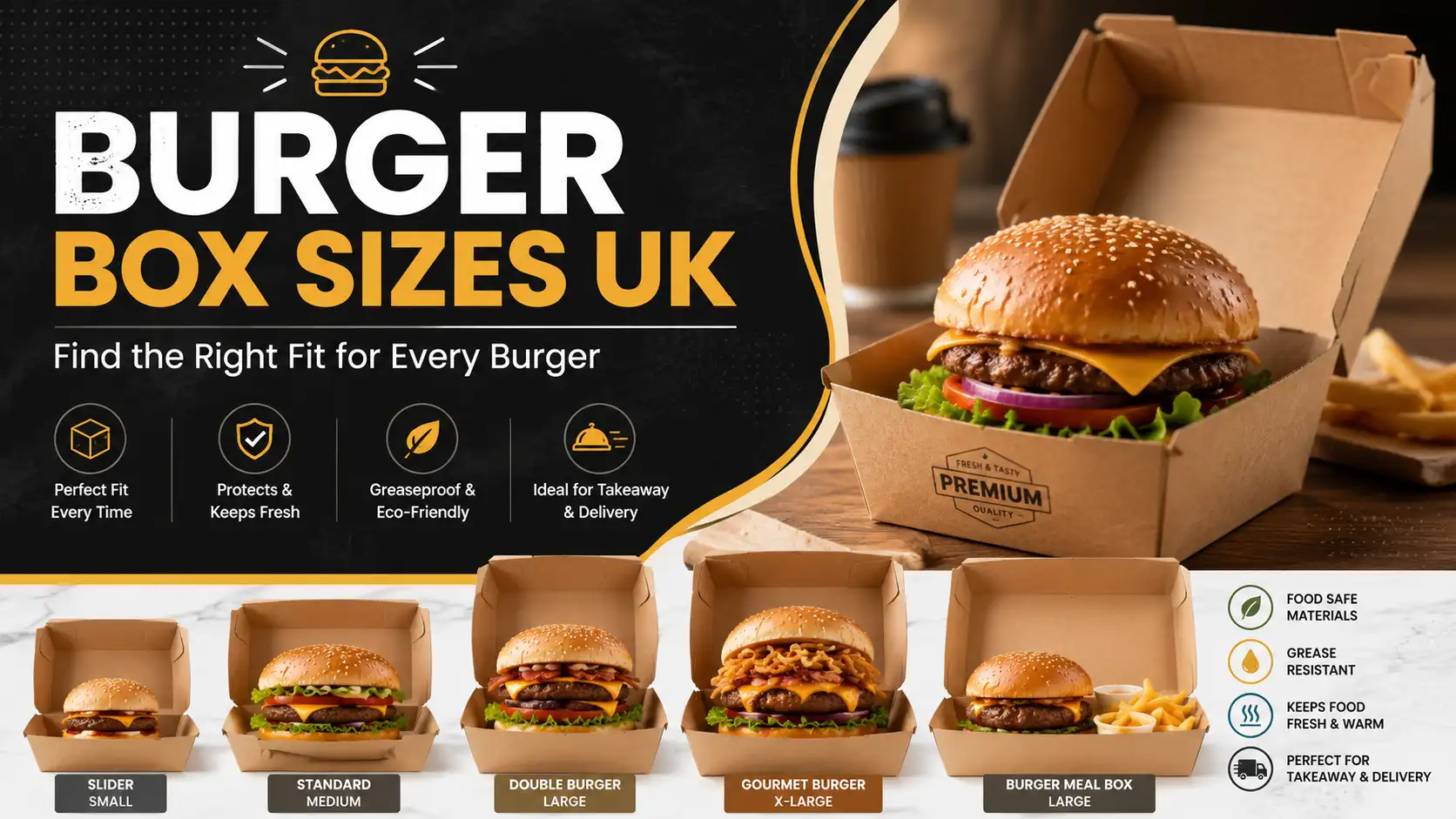
Common Burger Box Sizes Used in the UK
Burger packaging comes in different sizes because burgers vary widely. A small slider, a classic takeaway burger, and a large gourmet burger all need different space requirements.
The most common burger packaging sizes include:
| Burger Type | Recommended Box Size | Common Use |
| Slider Burger | Small box | Mini burgers, tasting menus, party food |
| Standard Burger | Medium box | Regular takeaway burgers |
| Double Burger | Large box | Thick patties with extra toppings |
| Gourmet Burger | Extra-large box | Premium burgers with multiple layers |
| Burger Meal Box | Burger + sides box | Burger, chips, and extras |
The exact size depends on burger height, ingredients, and whether additional items need to be included.
Standard Burger Box Size for Regular Takeaway Burgers
A standard burger box size is usually designed for classic takeaway burgers with one patty, cheese, lettuce, sauces, and regular toppings.
Most standard boxes provide enough room for:
- Single beef or chicken burgers
- Regular buns
- Basic salad toppings
- Sauce layers
- Small additional fillings
A medium-sized burger box is often the preferred choice for fast-food restaurants because it balances protection and cost. It avoids unnecessary packaging while still giving the burger enough space.
For UK takeaway businesses, standard boxes are commonly used because they work well for delivery orders and everyday menu items.
Understanding Burger Box Dimensions
Burger box dimensions usually depend on three measurements:
- Length
- Width
- Height
The first two measurements control how much space the burger has around its sides. Height is especially important because modern burgers are often taller due to:
- Double patties
- Extra cheese layers
- Fried toppings
- Gourmet sauces
- Brioche buns
A box with enough height prevents the lid from pressing against the burger. This helps maintain the original appearance when the customer opens the package.
Double Burger Box Size: Extra Space for Taller Burgers
A double burger needs more room than a standard burger because the additional patty increases height and weight.
A suitable double burger size box should provide:
- Extra vertical space
- Strong construction
- Secure closing design
- Better grease resistance
Double burgers often contain more sauces and fillings, so packaging must also handle moisture. A box that absorbs grease quickly can weaken during transport and create a poor customer experience.
For restaurants selling loaded burgers, investing in stronger packaging reduces complaints caused by damaged or messy deliveries.
Large Burger Box Dimensions for Gourmet Burgers
Gourmet burgers usually require larger packaging because they include premium ingredients and creative presentations.
A large burger box dimension is suitable for burgers with:
- Thick handmade patties
- Multiple cheese slices
- Crispy toppings
- Special sauces
- Larger buns
Premium burgers are often purchased because customers expect quality. Packaging should match that expectation.
A spacious box allows the burger to stay intact instead of being squeezed during packing. It also gives restaurants more flexibility when creating visually appealing food presentations.
Gourmet Burger Box Size Considerations
A gourmet burger box size should be selected based on more than just burger width.
Consider:
Burger Height
A tall burger needs additional clearance to prevent pressure on the top bun.
Ingredient Volume
Extra toppings require more internal space.
Delivery Distance
Longer delivery journeys need packaging that protects the burger from movement.
Branding Requirements
Custom printed boxes may need enough surface area for logos, colours, and customer messages.
Businesses that sell premium burgers often choose custom packaging because it creates a stronger connection between the food and the brand.
Slider Burger Box Size for Mini Burgers
Slider burgers are smaller but often ordered in groups. Their packaging needs are different from regular burgers.
A slider burger box size should:
- Hold multiple small burgers securely
- Prevent movement during delivery
- Allow easy serving
- Maintain presentation
Slider boxes are popular for:
- Events
- Catering services
- Sharing menus
- Food platters
Using a correctly sized box prevents small burgers from sliding around and losing their arrangement.
Burger Meal Box Dimensions for Complete Orders
Many takeaway businesses sell meal combinations that include burgers, chips, sauces, and sides.
A burger meal box dimension needs more space than a standard burger container.
These boxes are designed to hold:
- Burger portion
- Fries or wedges
- Dips
- Additional sides
Meal boxes can improve packing efficiency because restaurants can place multiple items together instead of using separate containers.
However, businesses should avoid oversized boxes. Too much empty space allows food to move during delivery.
How to Measure a Burger Box Correctly
Knowing how to measure a burger box helps businesses choose packaging that matches their menu.
Follow these steps:
- Measure the burger width from one side to the other.
- Measure the burger height from the base to the highest point.
- Add extra space for toppings and movement.
- Consider whether fries or sides will be included.
- Test the box with an actual packaged burger before ordering large quantities.
Real testing is important because ingredients behave differently. A fresh burger with melted cheese and sauces may require more space than a simple dry burger.
How to Stop Burgers Going Soggy During Delivery
One of the biggest packaging challenges for takeaway burgers is moisture.
Heat, steam, and sauces can make buns soft if packaging does not allow proper airflow.
Businesses can reduce sogginess by using:
- Greaseproof burger boxes
- Vented burger boxes
- Proper internal space
- Quality food-safe materials
Vented packaging allows steam to escape while keeping the burger protected. This helps maintain texture during delivery.
Packaging alone cannot solve every freshness issue. Cooking methods, sauce quantity, delivery time, and storage conditions also affect the final result.
Greaseproof Burger Boxes for Better Food Protection
Grease resistance is an important feature for burger packaging because burgers naturally contain oils, sauces, and melted ingredients.
Greaseproof burger boxes help by:
- Preventing oil leakage
- Keeping the packaging cleaner
- Improving customer handling
- Protecting branding designs
For busy takeaway businesses, durable grease-resistant packaging reduces packaging failures and improves customer satisfaction.
How to Choose the Best Size Box for Burgers
The best size box for burgers depends on your menu, not only the burger itself.
Before selecting packaging, consider:
Menu Variety
If your business sells different burger styles, you may need multiple box sizes.
Delivery Requirements
Delivery orders require stronger packaging than dine-in service.
Food Presentation
Customers expect premium burgers to look good when opened.
Storage Space
Packaging sizes should also work with your kitchen storage area.
Branding Goals
Custom Burger Boxes provide space to communicate your brand identity.
At OneStep CustomBoxes, businesses can explore packaging solutions designed around their specific food products, including custom options for different burger styles and takeaway needs.
Common Mistakes Businesses Make When Choosing Burger Boxes
Many packaging problems happen because businesses choose boxes based only on price.
Common mistakes include:
- Selecting boxes that are too tight
- Ignoring burger height
- Using weak materials for heavy burgers
- Choosing packaging without ventilation
- Not testing packaging before bulk orders
A slightly better-fitting box can protect food quality and reduce waste, making it a smarter long-term choice.
Custom Burger Boxes Help Build Stronger Food Brands
Packaging has become part of the customer experience. A branded burger box does more than hold food; it creates recognition.
Custom packaging can include:
- Brand colours
- Logos
- Special messages
- Unique designs
- Product information
For UK food businesses competing in crowded takeaway markets, memorable packaging can help customers recognise and remember their brand.
How the Right Burger Packaging Supports Food Quality
Finding the right burger box sizes helps businesses protect their food, improve delivery quality, and create a better customer experience. From standard takeaway burgers to large gourmet creations, every burger style needs packaging that matches its size, ingredients, and serving method.
The right choice depends on burger dimensions, delivery requirements, materials, and branding goals. Testing different options before placing large orders helps avoid common packaging problems.
For restaurants, cafes, and takeaway businesses in the UK, investing in suitable burger packaging is a practical step toward maintaining food quality and building customer trust.
If you need packaging designed around your burger products, request a custom packaging solution from OneStep CustomBoxes and find the right fit for your menu.
Frequently Asked Questions
Q1. What is the standard burger box size in the UK?
A standard burger box size is usually designed for regular takeaway burgers with a single patty, bun, and standard toppings. The exact dimensions vary depending on burger height and ingredients.
Q2. What size box is best for a double burger?
A double burger usually needs a larger box with extra height to prevent crushing. The box should have enough space for additional patties, cheese, sauces, and toppings.
Q3. How do I know what burger box size I need?
Measure your burger width and height, then choose packaging that provides enough room for toppings and movement without leaving excessive empty space.
Q4. Are greaseproof burger boxes better for takeaway?
Yes, greaseproof burger boxes help protect against oil and sauce leakage. They are especially useful for delivery and takeaway orders.
Q5. Can custom burger boxes improve branding?
Custom burger boxes can improve brand recognition by adding logos, colours, and designs that create a memorable customer experience.
Q6. What box size is best for gourmet burgers?
Gourmet burgers usually need larger boxes because they often contain taller buns, premium ingredients, and multiple layers.
Q7. How can burger boxes keep food warm during delivery?
Good packaging helps retain heat by reducing exposure to air and protecting the burger during transport. Proper ventilation also helps manage steam and moisture.