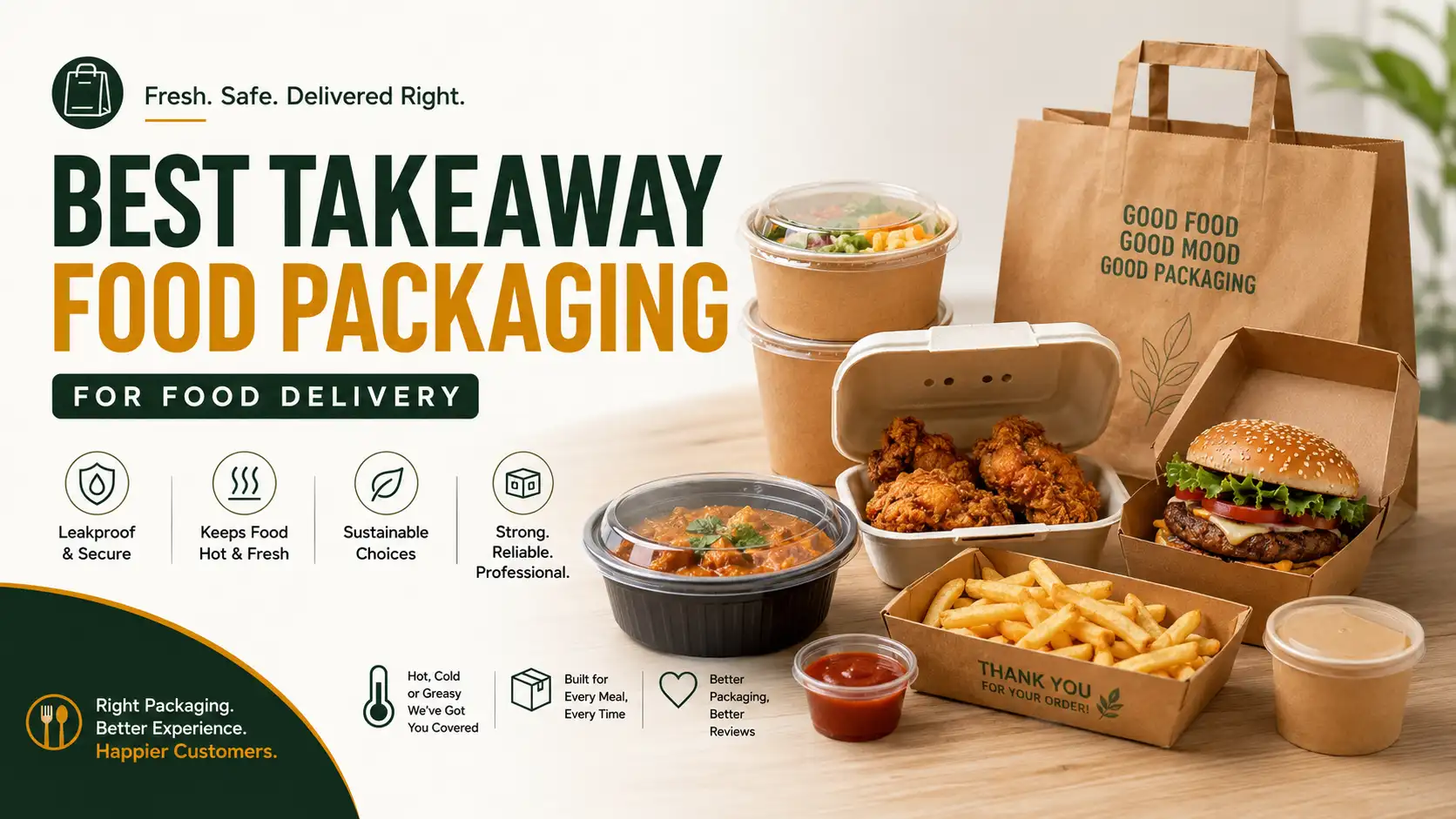
Food can leave your kitchen looking perfect and still reach the customer in poor condition. Chips become soft. Curry leaks into the delivery bag. Burger grease weakens the box. Cold salads turn warm, while hot food loses heat before the driver arrives.
The problem is often not the food. It is the packaging.
The best takeaway food packaging must match the meal, serving temperature, moisture level and delivery time. A container that works well for salad may fail with hot pasta. A tightly sealed box may protect a curry but ruin crispy fried chicken.
Choosing packaging by food type helps restaurants reduce complaints, protect presentation and give customers a better delivery experience.
What Is the Best Takeaway Food Packaging?
The best packaging keeps food safe, controls heat and moisture, prevents leaks and remains easy for staff and customers to handle.
Here is a quick starting point:
| Food type | Suitable packaging | Main reason |
| Curries, pasta and saucy meals | Leak-resistant polypropylene containers or lined paperboard cartons | Strong moisture barrier and secure closure |
| Fried chicken, chips and onion rings | Vented paperboard or corrugated food boxes | Releases steam to protect crispness |
| Burgers and kebabs | Grease-resistant paperboard or bagasse clamshells | Handles oil while protecting the food |
| Pizza and flatbreads | Corrugated pizza boxes with ventilation | Supports the food and releases excess moisture |
| Salads and cold meals | Clear food-safe PET containers or lined paper bowls | Good visibility and cold-food performance |
| Cakes and desserts | Paperboard boxes, window boxes or fitted trays | Protects shape and presentation |
| Soups and liquid dishes | Purpose-made leakproof tubs with tight-fitting lids | Reduces spills during transport |
| Mixed meals | Compartment trays or separate containers | Prevents sauces and textures from mixing |
No single material is best for every menu. The right choice depends on what the food does after it enters the container.
Why One Container Cannot Suit Every Meal
Takeaway food continues to release heat, steam, oil and moisture after packing. Packaging must control these changes during the journey.
Five factors matter most.
1. Heat
Hot food needs packaging that remains stable at the intended serving temperature. The container should not soften, distort, or become difficult to carry.
The packaging also needs enough insulation to slow heat loss without trapping so much steam that the meal becomes wet.
2. Steam
Freshly cooked food releases water vapour. When that vapour touches a cooler lid or container wall, it can turn back into water.
This condensation may:
- Soften fried coatings
- Make chips limp
- Wet burger buns
- Pool under the food
- Damage paper packaging
- Reduce the meal’s visual appeal
Steam control is therefore just as important as heat retention.
3. Grease
Oil can soak through untreated paper, weakening the structure. It can also stain the outside of a box, transfer onto customers’ hands and damage printed branding.
Greasy food usually needs a suitable barrier, grease-resistant board or correctly selected liner.
4. Liquid
Sauces, soups and dressings move during delivery. A container that appears secure on a counter may leak when tilted inside a courier bag.
Liquid meals need strong seams, compatible lids and enough space to prevent pressure against the closure.
5. Travel conditions
Delivery packaging must survive more than the meal itself. It may be stacked, carried downstairs, placed on a bicycle or transported over uneven roads.
The best packaging for food delivery should be tested under realistic travel conditions, not only judged while sitting flat in the kitchen.
Best Packaging for Hot Food
Hot meals need a balance between insulation, strength and moisture control.
Polypropylene Containers for Saucy Meals
Food-safe polypropylene containers are widely used for curries, rice dishes, pasta, stews and other moist meals. They can provide a strong liquid barrier and a secure lid when specified for the intended use.
They are especially useful when the meal:
- Contains sauce or gravy
- May be reheated by the customer
- Needs a tight closure
- Will travel for 20 minutes or longer
- Must be stacked with other orders
Not every plastic container is suitable for every temperature. Restaurants should confirm the intended food-contact use, temperature range, and reheating instructions with the supplier.
Lined Paperboard for Dry or Moderately Saucy Food
Coated or lined paperboard cartons can work well for noodles, rice, pasta, loaded fries and similar dishes.
They offer good branding space and can feel more premium than a plain plastic tub. However, the board and barrier must match the meal. A light grease-resistant layer may suit noodles but may not be enough for a thin, oily curry.
Before ordering, test the carton with the actual recipe. Oil, acidity, temperature and holding time can all affect performance.
Bagasse Containers for General Hot Meals
Bagasse food containers are made from moulded plant fibre, commonly using sugarcane residue. They are firm, practical and often chosen for burgers, rice dishes, street food and mixed meals.
Bagasse can be useful when a restaurant wants:
- A rigid clamshell structure
- Separate compartments
- A fibre-based appearance
- Resistance to light grease and moisture
- A plastic-reduction option
Performance varies between products. A bagasse box intended for a burger may not provide the leak resistance needed for soup or a thin sauce.
Packaging That Keeps Food Hot
A thicker container does not automatically keep food hot for longer. The full delivery system matters.
Useful heat-retention measures include:
- Choosing a container close to the food’s actual size
- Reducing excessive space
- Using insulated delivery bags
- Keeping containers closed after packing
- Separating cold drinks from hot meals
- Avoiding unnecessary waiting at the collection counter
- Grouping items without crushing lower containers
Oversized boxes allow more air around the food and may increase movement during delivery. A correctly fitted pack usually protects both temperature and presentation more effectively.
Packaging should also support kitchen speed. A complicated closure that takes too long during a busy service can lead to packing errors and heat loss.
Best Packaging for Cold Food
Cold meals have different requirements. They usually need protection from moisture, crushing and unwanted heat transfer.
Clear Containers for Salads and Desserts
Food-safe clear containers can help customers see salads, fruit, cakes and chilled desserts before opening the pack. This improves presentation and makes order checking easier.
Clear lids are useful when appearance influences the buying experience. However, the container must still be strong enough for stacking and suitable for the food’s temperature and acidity.
Paper Bowls for Cold Meals
Lined paper bowls can suit salads, poke bowls, cold noodles and grain-based meals. They offer a large printable surface and can support a clean, modern presentation.
Check that the lid fits securely. A loose lid can lift when the bowl is squeezed inside a delivery bag.
Separate Wet Ingredients
Dressings, sauces, fruit syrups and wet toppings should often be packed separately. This protects texture and gives the customer more control.
For example:
- Keep salad dressing in a small sealed pot
- Separate granola from yoghurt
- Pack croutons away from moist salad leaves
- Add sauce pots beside, rather than above, delicate food
- Separate hot protein from cold salad where practical
A small extra container can prevent the whole meal from arriving in poor condition.
Best Food Packaging for Greasy Food
Burgers, kebabs, fried chicken, doughnuts and loaded fries release oil that can move into the packaging.
The best food packaging for greasy food combines structural strength with an appropriate grease barrier.
Suitable options may include:
- Grease-resistant paperboard boxes
- Lined kraft cartons
- Moulded fibre clamshells
- Corrugated food boxes
- Greaseproof wraps and liners
- Coated paper trays
Plain paper or untreated board may absorb oil quickly. Once saturated, it can soften, tear or stain the customer’s clothing and furniture.
Use Liners for Extra Protection
A greaseproof liner can improve performance without changing the whole box. It can also make cleaning and serving easier.
Liners are useful for:
- Burgers
- Chips
- Fried chicken
- Pastries
- Doughnuts
- Toasted sandwiches
- Oily street food
The liner should fit the box properly. Too much loose paper can fold over the food, trap moisture, or make the meal look untidy.
Avoid Unnecessary Openings
Ventilation helps with steam, but too many openings can allow grease to escape. Vent size and position should be based on the food.
For a burger, small upper vents may release steam without placing openings directly beside oily fillings. For fried chicken, wider ventilation may be more useful because crispness is the main concern.
How to Keep Fried Takeaway Food Crispy
Fried food becomes soft when moisture builds up around the coating. Completely sealing hot fried food traps steam inside the container.
The answer is controlled ventilation.
Choose Vented Takeaway Packaging
Vented boxes allow some steam to escape before it settles back onto the food. This can help chips, fried chicken, tempura and onion rings retain their texture.
A practical fried-food box should:
- Release steam from the upper area
- Keep enough heat around the food
- Prevent the lid from touching the coating
- Resist grease at the base
- Stay stable when stacked
- Be easy to open without tearing
Ventilation involves a trade-off. More airflow may protect crispness but also allow faster heat loss. The correct balance depends on travel time, portion size, and the type of coating.
Do Not Pack Fried Food Too Tightly
Overfilling blocks airflow and presses hot pieces together. Steam becomes trapped between them.
Leave enough room for the food to breathe without using a box so large that the contents move during delivery.
Let Heavy Steam Escape Before Closing
Some foods release an intense burst of steam immediately after frying. Closing the lid at once may trap that moisture.
Where food safety and kitchen procedures allow, a brief controlled release of surface steam before final closing can improve texture. The food should not be left exposed for an extended period.
Keep Sauces Separate
Sauce can destroy crispness before the order leaves the building.
Pack dips, gravy, and wet toppings in separate leak-resistant pots unless the recipe is intended to be served coated.
How to Prevent Condensation in Food Packaging
Condensation cannot always be removed completely, but it can be controlled.
Use the following steps:
- Match ventilation to the food. Crispy food needs more moisture release than curry or soup.
- Avoid oversized containers. Too much space can create a larger area for vapour to circulate and condense.
- Keep hot and cold items apart. A cold drink beside a hot meal can cool one side of the pack and encourage condensation.
- Use absorbent or greaseproof liners where suitable. These can manage small amounts of surface moisture and oil.
- Protect airflow. Do not cover ventilation holes with labels or stack boxes in a way that blocks them.
- Test realistic journey times. A box that works for ten minutes may fail after thirty.
The goal is not simply to keep every container completely sealed. It is to create the right internal environment for the specific food.
How to Choose Leakproof Takeaway Packaging
A leakproof pack depends on more than the lid material.
Check the complete structure:
Lid Fit
The lid should engage evenly around the full rim. One weak corner can allow sauce to escape.
Seam Design
Folded paperboard cartons need secure seams and a barrier that reaches vulnerable areas. Liquid can find small gaps that dry food would never expose.
Headspace
Do not fill liquid containers to the top. Leave enough space for movement without placing constant pressure on the lid.
Container Strength
Thin containers may flex when picked up. This movement can break the lid seal even when the closure initially appears secure.
Bag Position
Keep liquid dishes upright and support them inside the delivery bag. Dividers or fitted outer cartons can stop tubs from sliding.
Tamper Evidence
A branded label or seal can reassure customers that the order has remained closed. It should not be used to hold together a poorly fitted container.
A practical test is to fill the container with the real dish, close it using normal kitchen methods and carry it through the expected delivery route. Check the lid, seams, base and outer bag at 15, 30 and 45 minutes.
Takeaway Food Packaging Materials Compared
| Material | Best used for | Main benefits | Important trade-offs |
| Paperboard | Burgers, noodles, pastries and light meals | Printable, lightweight and available in many shapes | May need a grease or moisture barrier |
| Corrugated board | Pizza, fried food and larger meals | Strong, insulating and suitable for ventilation | Uses more storage space than thin board |
| Polypropylene | Curries, pasta, rice and saucy meals | Secure closure and strong liquid resistance | Must be suitable for the intended temperature and use |
| PET | Salads, fruit and cold desserts | Clear appearance and good cold-food presentation | Standard PET is generally selected for cold applications |
| Bagasse | Burgers, rice dishes and compartment meals | Rigid fibre structure and natural appearance | Not every design is suitable for thin liquids |
| Aluminium containers | Baked meals and selected hot dishes | Strong heat performance and good product protection | Can affect presentation and requires a compatible lid |
| Greaseproof paper | Burgers, chips, pastries and fried items | Controls oil and supports easy handling | Usually needs an outer box or bag |
| Compostable materials | Selected food-service settings with a suitable waste route | Can support specific organics collection systems | Certification and local disposal options must be checked |
Sustainability claims should be based on what happens after the customer finishes the meal. A pack labelled compostable may still enter general waste when no suitable collection route is available. WRAP advises businesses to consider compostable packaging strategically and check whether collection and processing work in practice.
Food-Safe Packaging Requirements in the UK
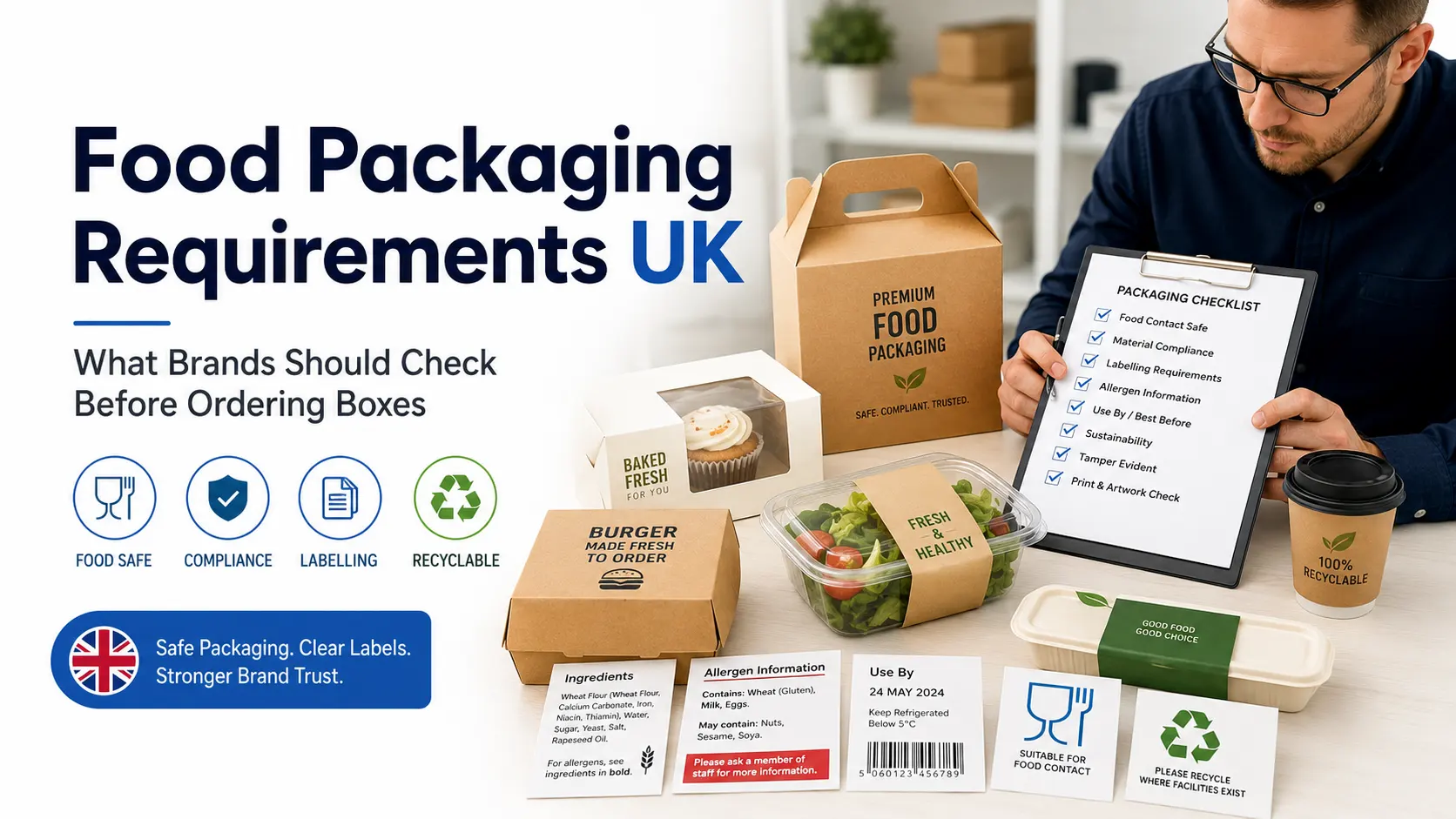
Food businesses must use packaging that is suitable for food contact. UK government guidance states that suitable packaging may be marked “for food contact” or display the glass-and-fork symbol. Written evidence of compliance is required for certain materials, including plastics, ceramics and cellophane.
Ask the packaging supplier for information covering:
- Intended food type
- Maximum and minimum temperatures
- Direct food-contact suitability
- Reheating or microwave use
- Greasy, acidic or aqueous food contact
- Storage conditions
- Relevant declaration of compliance
- Any limits on contact time
Do not assume that a container is safe for hot food simply because it looks strong. Suitability depends on the complete material specification and its intended conditions of use.
Check Rules for Your UK Nation
Packaging and single-use plastic requirements are not identical across England, Scotland, Wales and Northern Ireland.
In England, single-use plastic cutlery and expanded or extruded polystyrene containers for ready-to-eat food are banned. Certain plates, bowls and trays are restricted, although packaging filled at the point of sale can fall within stated exemptions. Businesses should check the exact rules for where they operate rather than applying one policy across the whole UK.
Common Takeaway Packaging Mistakes
Choosing by Appearance Alone
A kraft box may look natural and premium but still fail if the board cannot handle the food’s grease or moisture.
Function should be approved before colour, finish and print.
Using One Pack for the Whole Menu
The same container rarely suits soup, chips, cake and salad. Reducing the number of packaging formats may simplify stock, but it can increase leakage and quality complaints.
A better approach is to group menu items by packaging behaviour.
Ignoring Delivery Time
Packaging tested for counter collection may not survive a 40-minute delivery.
Longer journeys usually require better closure, stronger stacking performance and closer control of heat and condensation.
Blocking Ventilation with Labels
Large tamper seals and delivery labels can cover vents. This creates a well-branded box that no longer performs correctly.
Plan label position during the packaging design stage.
Overfilling Containers
Overfilling increases spills, compresses food, and makes lids difficult to close. It can also slow staff during peak service.
Choose the pack around the real portion, including toppings and side dishes.
Treating “Eco-Friendly” as One Material
Paper, recyclable plastic, bagasse and compostable materials each have different strengths and disposal routes.
The better choice is the one that protects the meal, reduces food waste and has a realistic end-of-life route.
Test Packaging Before Placing a Large Order
A short packaging trial can prevent expensive mistakes.
Use a simple six-step process:
- Select three to five of the most difficult menu items.
- Pack them using normal kitchen portions and procedures.
- Place them in the same bags used for customer orders.
- Carry or drive them for the average delivery time.
- Open and inspect them as a customer would.
- Record heat, leaks, texture, presentation, and ease of opening.
Include busy-service conditions. Staff should be able to assemble, fill, and close the pack quickly without special handling.
The lowest unit price does not always produce the lowest operating cost. A slightly stronger box may reduce replacements, refunds, double-bagging and customer complaints.
Custom Packaging Should Improve the Meal, Not Just the Logo
Custom printing is most valuable after the structure has been matched to the food.
Useful custom features may include:
- Correctly positioned ventilation holes
- Grease-resistant inner surfaces
- Secure locking tabs
- Compartments for sides and sauces
- Portion-specific sizing
- Space for allergen and order labels
- Tamper-evident seals
- Clear reheating or disposal instructions
- Branding that remains readable after handling
OneStep CustomBoxes supplies custom fast-food packaging for UK restaurants, takeaways and delivery businesses. Options include custom sizes, styles, printing and design assistance for both smaller and wholesale orders.
Before approving a bulk run, share the food type, serving temperature, portion dimensions, grease level, delivery time and closure requirements. These details help identify the right board, barrier and structure before artwork is finalised.
Final Recommendation
The best takeaway food packaging is not the container with the most features. It is the pack that solves the main risk for each meal.
- Use secure, leak-resistant containers for curries, soups and sauces.
- Use vented packaging for chips, fried chicken and other crispy food.
- Use grease-resistant board or liners for burgers, kebabs and oily meals.
- Use clear cold-food containers when freshness and visibility matter.
- Use compartments or separate packs when textures and temperatures should not mix.
Test the packaging with real food before committing to a full order. A practical trial reveals leaks, condensation and handling problems that specifications alone may not show.
For custom takeaway boxes designed around your menu, portion sizes and delivery process, Request a quote from OneStep CustomBoxes.
Frequently Asked Questions
1. What is the best packaging for hot takeaway food?
The best option depends on the meal. Leak-resistant polypropylene tubs can suit curries and saucy dishes, while lined paperboard or bagasse containers may work well for rice, pasta, burgers and dry hot meals. Confirm that the packaging is approved for the intended temperature and food type.
2. What packaging keeps takeaway food hot for longer?
Close-fitting containers, insulated delivery bags and properly managed collection times help retain heat. Avoid packing hot food next to cold drinks, and choose containers that do not leave excess space around the meal.
3. How do restaurants keep fried food crispy during delivery?
Use vented takeaway packaging, avoid overfilling the box, and keep sauces separate. Controlled ventilation allows steam to escape before it condenses and softens the fried coating.
4. What is the best packaging for greasy food?
Grease-resistant paperboard, lined kraft cartons, moulded fibre containers and greaseproof wraps are practical choices. The material should resist oil for the full expected delivery time without weakening or staining.
5. Are bagasse food containers leakproof?
Some bagasse containers handle grease and moderate moisture well, but they are not automatically suitable for soups or thin sauces. Performance depends on the product design, barrier treatment and lid fit.
6. Is compostable takeaway packaging always better?
Not necessarily. Compostable packaging works best when it is certified, and there is a collection system that sends it to a suitable processing facility. Where that route does not exist, recyclable or reduced-material packaging may be more practical.
7. How can I test leakproof takeaway containers?
Fill the container with the real meal, close it using normal staff procedures and place it in a delivery bag. Test it over the expected journey time and inspect the rim, corners, base, lid and outer bag for leaks.
8. Can takeaway food packaging be custom printed?
Yes. Paperboard, corrugated and many fibre-based takeaway formats can be printed with logos, colours, instructions and product information. The food-contact structure, ventilation and barrier should be approved before the artwork is finalised.