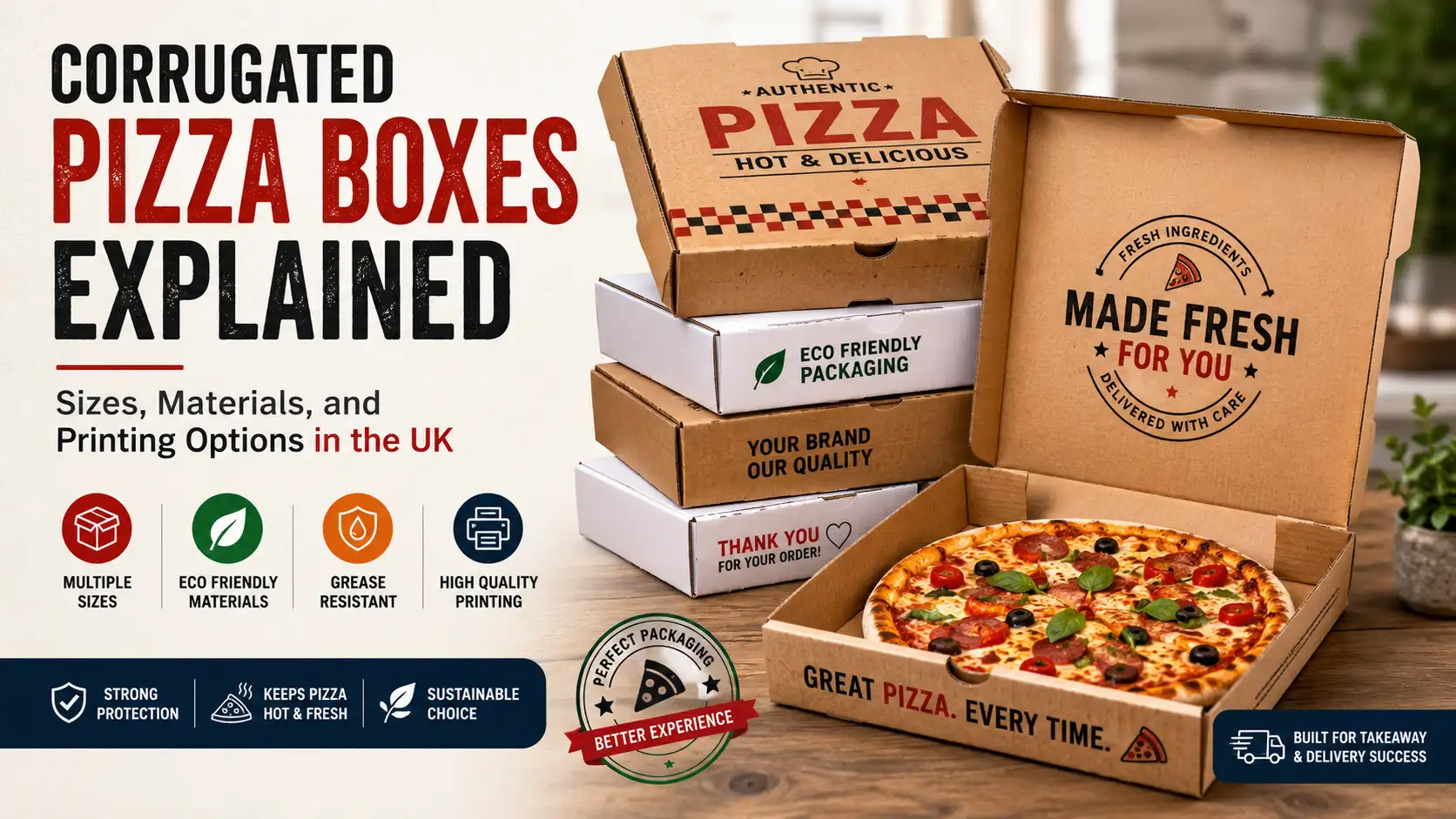
A pizza box has one simple job: get the pizza to the customer hot, fresh, safe, and in good shape. But for takeaways, restaurants, food trucks, and delivery brands, the box also does something bigger. It carries the brand into the customer’s home.
Corrugated pizza boxes are popular because they offer the right mix of strength, food protection, heat control, and print quality. A weak box can bend during delivery. A poor material choice can trap steam and make the crust soft. A plain box can miss a branding opportunity.
For UK food businesses, the right Pizza Box is not just about size. It is about board type, flute strength, food safety, grease resistance, printing style, and how the box performs during real takeaway and delivery use.
What Are Corrugated Pizza Boxes?
Corrugated pizza boxes are made from corrugated board. This board usually has a fluted paper layer between flat liner layers. The fluted layer gives the box strength without making it too heavy.
That structure helps the box:
- Hold the weight of the pizza
- Reduce bending during handling
- Protect the edges from crushing
- Support stacking during busy service
- Keep the pizza warmer during short delivery trips
A pizza box is not the same as a basic flat cardboard sleeve. Pizza is hot, oily, and often heavy in the centre. The box must manage heat, steam, grease, and movement at the same time.
That is why corrugated pizza packaging is common across UK takeaways, pizza shops, restaurants, and food delivery brands.
Why Corrugated Pizza Packaging Works So Well
Pizza packaging has to deal with several real-world problems at once. A fresh pizza leaves the oven hot. Steam starts building quickly. Cheese and oil can mark the base. Delivery riders stack boxes in bags. Customers expect the pizza to arrive looking close to how it left the kitchen.
Corrugated board helps because it gives a balance of structure and breathability.
A good pizza box can help with:
- Heat retention during local delivery
- Box strength when several pizzas are stacked
- Grease control when paired with the right board or liner
- Better presentation for branded takeaway orders
- Easier handling for fast kitchen packing
For busy takeaway counters, assembly speed matters too. A box that looks good but slows the team down can create delays during peak hours. The best design is strong, quick to fold, easy to close, and simple to stack.
Common Pizza Box Sizes in the UK
Pizza box sizes in the UK usually follow common pizza diameters. The right size depends on your menu, crust style, toppings, and whether the pizza needs extra room around the edges.
| Pizza Box Size | Common Use | Best For |
| 7 inch | Small personal pizza | Kids’ meals, samples, small takeaway portions |
| 9 inch | Small pizza | Light meals, lunch deals, small portions |
| 10 inch | Medium pizza | Standard takeaway menus |
| 12 inch | Large pizza | Popular delivery and restaurant size |
| 14 inch | Extra-large pizza | Sharing pizzas and family deals |
| 16 inch | Giant pizza | Party pizzas and large takeaway orders |
These sizes are general. Some businesses need custom pizza box dimensions because their pizza shape, crust thickness, or toppings need extra room.
A deep pan pizza may need more height than a thin crust pizza. A loaded pizza with extra toppings may need stronger board support. A premium restaurant box may need a cleaner fit to improve presentation.
How to Choose the Right Pizza Box Dimensions
Choosing pizza box dimensions sounds simple, but small mistakes can affect customer experience.
A box that is too tight can damage the crust. A box that is too large can allow the pizza to slide around during delivery. Too much empty space also looks wasteful and can reduce the premium feel.
Use these practical checks before ordering:
- Measure the actual pizza, not just the menu size
A “12 inch pizza” can sometimes come out slightly larger after baking. - Check crust height
Stuffed crust, deep pan, and loaded pizzas need more internal depth. - Allow a light edge space
The pizza should sit comfortably without pressing against every side. - Test delivery movement
Put the box in a delivery bag and check whether the pizza shifts. - Stack several boxes
Make sure the lower boxes do not collapse under normal order loads.
For wholesale pizza boxes UK orders, testing a sample first is a smart move. A small fit issue can become expensive when repeated across hundreds or thousands of boxes.
Best Materials for Pizza Boxes
Pizza box materials affect strength, appearance, food safety, cost, and sustainability. The most common options include kraft board, white board, and different corrugated flute types.
Kraft Pizza Boxes
Kraft pizza boxes are popular for natural-looking takeaway packaging. They often come in brown kraft board and suit brands that want a simple, earthy, or eco-conscious look.
Brown kraft pizza boxes work well for:
- Artisan pizza brands
- Organic food businesses
- Street food vendors
- Casual takeaway restaurants
- Eco-friendly pizza boxes
The natural brown finish can make the box feel warm and authentic. It also pairs well with black, dark green, red, or single-colour branding.
White Cardboard Pizza Boxes
White cardboard pizza boxes offer a cleaner and brighter surface for printing. They are often chosen by brands that want sharper colours, clearer logos, and a more polished takeaway look.
White boxes are useful for:
- Premium pizza restaurants
- Food chains
- Modern takeaway brands
- Full-colour printed pizza boxes
- Branded pizza boxes with strong visual design
The trade-off is that the whiteboard may show grease marks and handling marks more easily than brown kraft. For high-end branding, that clean print surface can still be worth it.
Food Grade Pizza Boxes
Food-grade pizza boxes are designed for food contact use. In the UK, food contact materials must be suitable for their intended use and should not transfer unsafe substances into food. The UK Food Standards Agency explains that food contact material rules apply to items expected to touch food or transfer substances to food.
For pizza businesses, this matters because the box may touch the crust, cheese, oil, and steam. Food-safe materials, suitable inks, and correct handling all help protect the customer and the brand.
When ordering boxes, ask about:
- Food-safe board
- Food-safe printing inks
- Grease resistance options
- Material suitability for hot food
- Supplier guidance for direct food contact
A pizza box should not only look good. It should be suitable for the food it holds.
Corrugated Flute Types for Pizza Boxes
The flute is the wavy paper layer inside corrugated board. It affects strength, cushioning, print finish, and thickness.
For pizza packaging, the most common choices are usually single-wall pizza boxes made with a flute profile that balances strength and cost.
| Flute Type | Typical Strength and Feel | Best Use |
| B flute | Thicker and stronger than the E flute | Takeaway pizza boxes, stacking, delivery orders |
| E flute | Thinner with smoother print surface | Premium print, lighter pizzas, clean branding |
| Single wallboard | One fluted layer between liners | Most standard pizza packaging |
| Double wallboard | Two fluted layers | Heavy food packaging, bulk stacking, specialist use |
B flute pizza boxes are often a strong choice for takeaway and delivery because they provide good structure. E flute pizza boxes can offer a smoother surface for print, which helps when branding detail matters. Corrugated flute thickness can vary by board supplier, but B flute is commonly around 3 mm and E flute around 1.5 mm in many corrugated board guides.
The best choice depends on your pizza size, delivery distance, stack height, and print needs.
Grease-Resistant Pizza Boxes: When Do You Need Them?
Pizza boxes often face oil, cheese, sauce, and heat. A basic corrugated box can work for many pizzas, but some menus need better grease control.
Grease-resistant pizza boxes are useful when you sell:
- Cheese-heavy pizzas
- Deep pan pizzas
- Meat feast pizzas
- Garlic butter crusts
- Loaded takeaway pizzas
- Long-distance delivery orders
Grease resistance helps reduce oil marks, soft spots, and leakage. It can also improve how the box looks when the customer opens it.
There is a balance to consider. Some grease-resistant coatings or liners may affect recyclability depending on the material used. That is why it is better to discuss your menu and sustainability goals before choosing the final board.
Recyclable Pizza Boxes and Sustainability
Recyclable pizza boxes are important for modern UK food brands. Customers notice waste. Many also prefer packaging that feels simple, responsible, and easy to dispose of.
Pizza boxes are usually recyclable when they are empty, but local recycling rules can vary. Recycle Now says pizza boxes are usually recyclable, even when stained or greasy, as long as they are empty, but people should check with their local authority. London Recycles gives a more cautious view, saying very oily or food-contaminated cardboard should not go in recycling.
For businesses, the practical answer is clear: keep packaging as simple and recyclable as possible, and avoid unnecessary mixed materials unless the food really needs them.
A better eco packaging choice may include:
- Recyclable corrugated board
- Kraft pizza boxes
- Minimal plastic coatings
- Water-based or food-safe inks were suitable
- Right-size packaging to reduce waste
- Clear disposal messaging where space allows
Eco friendly pizza boxes should still perform well. A weak box that fails during delivery creates food waste, refunds, and poor reviews. Sustainability and performance must work together.
Vented Pizza Boxes and Heat Control
Hot pizza releases steam. If the steam stays trapped inside the box, the crust can become soft. If too much heat escapes, the pizza arrives cold. The right box design manages both problems.
Vented pizza boxes include small openings that allow some steam to escape. This helps reduce sogginess, especially for thin-crust or crispy base pizzas.
Good heat retention pizza packaging depends on:
- Board thickness
- Flute type
- Box depth
- Vent placement
- Delivery time
- Delivery bag quality
- How long does the pizza sit before dispatch
A box alone cannot fix poor delivery timing. But the right corrugated box can protect quality during the normal takeaway journey.
For short local delivery, standard corrugated pizza boxes often work well. For longer delivery routes, thicker board, better venting, and stronger stacking performance become more important.
Printing Options for Custom Pizza Boxes UK
Custom pizza boxes UK orders are not only about adding a logo. Printing affects brand memory, customer trust, and how professional the food feels.
A plain box does the basic job. A printed box turns every order into a small brand touchpoint.
Common pizza box printing options include:
- Single-colour printing for simple logos and clean branding
- Two-colour printing for stronger contrast without high print cost
- Full-colour printing for bold artwork, product images, or campaign designs
- Inside printing for messages, offers, QR codes, or social media prompts
- Seasonal printing for promotions, football nights, holidays, and limited menus
For many pizza brands, single or two-colour print on kraft board is enough. It looks professional, keeps costs controlled, and works well for repeat orders.
Full-colour printed pizza boxes are better when the packaging is part of the brand experience. This may suit premium restaurants, franchises, product launches, or food businesses that depend heavily on social sharing.
Food Safe Printing Inks
Printing on food packaging must be handled with care. The printed surface may not always touch the pizza directly, but inks, coatings, and board choices still matter. Food contact packaging rules focus on safety, suitability, and preventing unwanted transfer into food.
For pizza boxes, printing is usually placed on the outside. Still, businesses should ask their packaging supplier about suitable inks and food-safe production practices.
Important checks include:
- Are the inks suitable for food packaging use?
- Will the printed area touch food?
- Is there any coating or finish on the inside?
- Is the board suitable for hot takeaway food?
- Can the supplier guide you on safe use?
A bright design is useful only when the packaging remains safe and suitable for its intended use.
Pizza Box Artwork Guidelines
Good artwork makes a pizza box look clear, branded, and easy to remember. Poor artwork can make even a high-quality box look cheap.
Before sending artwork, prepare the basics:
- Logo in vector format where possible
- Brand colours or Pantone references
- Clear font choices
- High-resolution design files
- Correct box size
- Bleed and safe margin
- Any QR code tested before printing
- Contact details checked twice
A pizza box dieline template is usually needed for accurate design placement. The dieline shows fold lines, cut lines, glue areas, and print-safe zones. This helps stop important text or logos from landing on folds or edges.
Keep the design simple if the box is small. A 9-inch box has less visual space than a 14-inch box. Large graphics may look good on screen but feel crowded after folding.
Branding Ideas for Printed Pizza Boxes
Branded pizza boxes can do more than show a logo. They can support repeat orders, reviews, loyalty, and social media.
Useful ideas include:
- A short brand message inside the lid
- A QR code for online ordering
- A discount code for the next order
- Social media handles
- Allergen reminder text where appropriate
- A “made fresh” message
- Simple reheating tips
- A loyalty stamp area
- A local community message
Avoid overloading the design. Customers open the box for the pizza, not to read a poster. Clear branding, useful details, and clean layout usually work better than heavy text.
Wholesale Pizza Boxes UK: What to Check Before Ordering
Wholesale pizza boxes UK orders can reduce unit cost, but the wrong order can create storage and usability problems.
Before placing a larger order, check:
- Minimum order quantity
- Box size and internal dimensions
- Board grade and flute type
- Food contact suitability
- Grease resistance needs
- Print method and colour limits
- Delivery time
- Storage space
- Seasonal demand
- Reorder process
For small pizza shops, starting with the most-used size is often safer. If most sales are 12-inch pizzas, perfect that box first. Then move to 10-inch, 14-inch, or custom sizes.
For growing brands, it is worth standardising box sizes across branches. It keeps stock control easier and helps maintain a consistent customer experience.
Common Mistakes When Choosing Pizza Boxes
Many pizza box problems come from small decisions made too quickly.
Choosing Price Before Performance
The cheapest box may look fine when empty. Problems show up during service. If the base bends, corners crush, or grease marks spread too fast, the box can hurt the customer experience.
Low packaging cost is useful only when the box still protects the product.
Ignoring Steam and Ventilation
A strong box with poor ventilation can still make the crust soggy. This is common with hot pizzas packed too quickly and held too long before dispatch.
Vent design and delivery workflow both matter.
Using the Wrong Board for Large Pizzas
A 16 inch pizza needs more support than a 9 inch pizza. The bigger the pizza, the more important the board strength becomes.
Large pizzas also face more centre sag. A stronger flute or a better board grade can help.
Overcomplicating the Print Design
Too many colours, small text, and crowded artwork can reduce the impact of the box. Simple print often looks better, especially on kraft board.
Forgetting Storage Space
Pizza boxes arrive flat, but they still need space. A large wholesale order can create storage issues in small kitchens.
Measure your storage area before ordering bulk quantities.
How Corrugated Food Packaging Supports Takeaway Brands
Corrugated food packaging helps takeaway brands protect food and improve presentation at the same time. For pizza, the box is often the first physical brand item the customer sees after ordering.
Good packaging can support:
- Fewer damaged orders
- Better delivery presentation
- Stronger brand recall
- Improved customer confidence
- Easier repeat ordering
- Cleaner takeaway operations
A customer may not think deeply about the box when everything goes well. But they notice quickly when the box is weak, greasy, crushed, or hard to handle.
That is why packaging should be selected as part of the product experience, not as an afterthought.
When Custom Pizza Boxes Make Sense
Custom pizza boxes make sense when packaging can improve sales, presentation, or customer loyalty.
They are especially useful for:
- New pizza shops are building brand awareness
- Restaurants adding takeaway or delivery
- Food trucks and pop-up pizza brands
- Franchises needing consistent packaging
- Premium pizza brands with higher price points
- Businesses running offers or seasonal campaigns
Custom packaging does not always need to be expensive or complex. A kraft box with a strong one-colour logo can look clean, professional, and memorable.
OneStep CustomBoxes provides custom pizza boxes for UK businesses with options for size, material, printing, and branded design support. For restaurants and takeaways that need practical packaging with a professional look, a sample or quote can make the decision easier before ordering in bulk.
Final Checklist Before You Order Corrugated Pizza Boxes
Use this quick checklist before choosing your final pizza box:
- Does the size match the real baked pizza?
- Is the box strong enough for delivery stacking?
- Does the board suit hot and greasy food?
- Is the material suitable for food packaging use?
- Does the design support your brand clearly?
- Are the printing colours practical for your budget?
- Will the box fit your delivery bags?
- Is the box easy for staff to fold quickly?
- Can the packaging be stored easily?
- Does it support your sustainability goals?
The best pizza box is not always the thickest or the most colourful. It is the one that fits your pizza, protects the food, supports your workflow, and gives customers a better brand experience.
FAQs About Corrugated Pizza Boxes
What are corrugated pizza boxes made from?
Corrugated pizza boxes are usually made from corrugated board with a fluted paper layer between flat liners. This structure gives the box strength while keeping it lightweight enough for takeaway and delivery use.
What size pizza boxes are most common in the UK?
Common pizza box sizes in the UK include 7 inch, 9 inch, 10 inch, 12 inch, 14 inch, and 16 inch. The best size depends on the actual pizza diameter, crust height, toppings, and delivery needs.
Are corrugated pizza boxes recyclable?
Many corrugated pizza boxes are recyclable when they are empty, but local council rules can vary. Heavy grease, cheese, or food residue may affect recycling. Customers should remove leftover food and check local recycling guidance.
What is the best material for pizza boxes?
Kraft corrugated board is a popular choice for natural and eco friendly pizza boxes. White corrugated board is better for bright printed branding. The best material depends on your brand style, pizza type, grease level, and print requirements.
Are printed pizza boxes safe for food?
Printed pizza boxes can be safe when made with suitable food packaging materials and appropriate printing inks. Printing is usually placed outside the box, but it is still important to confirm food contact suitability with the supplier.
What is the difference between B flute and E flute pizza boxes?
B flute pizza boxes are usually stronger and thicker, making them useful for delivery and stacking. E flute pizza boxes are thinner and smoother, which can help with cleaner printing and lighter packaging needs.
Can I order custom pizza boxes in small quantities?
Many packaging suppliers offer custom pizza boxes with minimum order quantities. OneStep CustomBoxes offers custom packaging options for UK businesses, with support for sizes, printing, and design needs.
What should I include on branded pizza boxes?
Useful elements include your logo, website, phone number, QR code, social media handle, short brand message, and reorder offer. Keep the design clean so the box looks professional and easy to read.